
📘 This article is part of our comprehensive guide: Pharmaceutical Empty Capsules: The Complete Selection Guide
TL;DR: Choosing the right empty capsule isn’t just about your formulation — it’s about whether the shell will actually run on your line. Get capsule filling machine compatibility wrong, and you’re looking at jams, cracks, fill-weight drift, and a very unhappy production manager. This playbook walks you through machine types, the four physical properties that determine success or failure on your pharmaceutical capsule production line, seven common problems with actionable fixes, and the environmental setup HPMC capsules demand for smooth, high-yield filling.
🤖 Capsule Filling Machine Types: A Quick Refresher
Not all filling machines are created equal, and knowing where your equipment sits on the spectrum shapes every compatibility decision you make.
Semi-Automatic Machines for Small-Batch Production
Semi-automatic machines — typically running at 2,000 to 25,000 capsules per hour — are the workhorses of clinical trial batches, R&D formulation development, small-volume specialty products, and compounding pharmacies. Operators load capsules manually; the machine handles separation, filling, and rejoining. Output requires manual unloading.
The good news? These machines are remarkably forgiving. Both gelatin and HPMC capsules run well at lower operating speeds, simply because the mechanical forces involved are gentler. If you are running an automatic capsule filling equipment setup in semi-auto mode for development work, you already have substantial flexibility built in. Just don’t assume that flexibility translates when you scale up to full automation.
High-Speed Automatic Filling Platforms ⚡
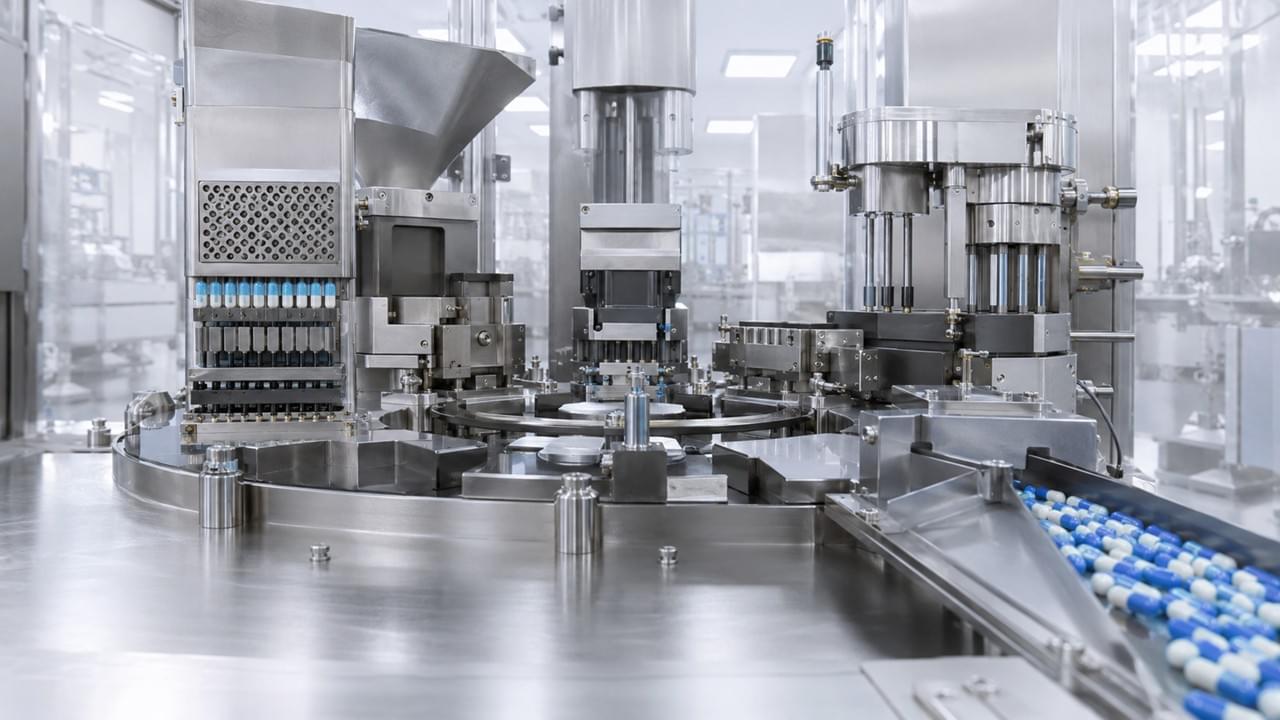
For large-scale pharmaceutical manufacturing, contract manufacturing organizations, and nutraceutical supplement producers, high-speed machines running 100,000 to 300,000+ capsules per hour are the standard. At these speeds, even micron-level dimensional variation matters.
| Manufacturer | Platform | Speed Range | Key Feature |
|---|---|---|---|
| Capsugel/Lonza | Xcelodose, Licaps | Up to 165,000/hr | Capsule body orientation system |
| Bosch Packaging | GKF series | Up to 300,000/hr | Multi-station modular design |
| MG2 | G series | Up to 200,000/hr | Rotary technology |
| IMA | Adapta series | Up to 165,000/hr | Flexible format change |
| Sejong | SJF series | Up to 100,000/hr | Cost-effective Asian market |
Most machine tooling sets support the full capsule size range from 000 down to 5, but size 0 and size 00 capsules remain the most universally compatible across all platforms — they are simply the most commonly specified sizes industry-wide. Vsun Medical capsules are manufactured to dimensional standards compatible with all major machine platforms listed above, with full traceability documentation provided as standard.
⚠️ Heads up: Capsule shell dimensional tolerances and physical properties must match your machine’s specification sheet — at 200,000 capsules per hour, there is zero margin for “close enough.”

🔬 4 Physical Properties That Make or Break Capsule Filling Machine Compatibility
Before you even load capsules into the hopper, four shell properties determine whether your shift runs clean or goes sideways. Understanding these is the difference between proactive setup and reactive firefighting.
1. Shell Stiffness & Brittleness: Capsule Filling Machine Compatibility 101 🥚
Gelatin capsules are naturally more flexible and elastic at standard filling room conditions — 20 to 25 °C with 45 to 55% relative humidity. That flexibility means they absorb minor mechanical stresses gracefully as they travel through orientation, separation, and transport systems.
HPMC capsules tell a different story. They run somewhat stiffer than gelatin under the same conditions, and when humidity dips below 30% RH, they become genuinely brittle. We have seen lines running gelatin at 200,000 capsules per hour without issue suddenly hit double-digit breakage rates after switching to HPMC — simply because nobody adjusted the room humidity.
🛠️ Production fix: When switching from gelatin to HPMC on any high-speed automatic capsule filling equipment, lock filling room humidity at 45 to 55% RH as your absolute floor — not a target, a floor. Consult your machine manufacturer’s HPMC-specific operational documentation before running your first batch.
2. Electrostatic Behavior: A Capsule Filling Machine Compatibility Curveball ⚡
If you have ever watched capsules refuse to drop into orientation slots, or stick stubbornly to transport tracks, or come out of the machine wearing a fine coat of powder — you have experienced electrostatic discharge firsthand.
Gelatin capsules generate relatively low static charge during handling, so powder adhesion to the capsule exterior is generally minimal. HPMC, by contrast, has a noticeably higher tendency to build up electrostatic charge, especially when humidity runs low. The consequences cascade quickly: capsules stick in orientation bowls and transport tracks, fine powder clings to capsule exteriors causing cosmetic defects and capping-system clogging, and fill-weight consistency suffers as powder segregation sets in.
🧯 The fix is straightforward: Install ionization bars at every capsule feed point. Maintain 50 to 60% RH in the filling area — this alone eliminates most static issues. And switch to anti-static guide materials in capsule transport paths wherever possible.
3. Dimensional Tolerances: The Capsule Filling Machine Compatibility Gatekeeper 📏
Both gelatin and HPMC capsules are manufactured to USP and EP international dimensional standards, and reputable suppliers — including Vsun Medical — provide full Certificate of Analysis documentation with every batch. That said, lot-to-lot dimensional variation exists within specification limits, and high-speed filling machines with tight tooling clearances are unforgiving. Capsules sitting at the tolerance edges can cause jamming in the sizing ring, body-to-cap separation failures, and overfilling errors that quietly erode yield.
🔍 Before every production run: Cross-check capsule dimensional specifications on the Certificate of Analysis against your machine’s tooling specification sheet. Five minutes of verification prevents hours of downtime. For more on what CoA parameters to scrutinize, see our article on Quality Standards in Medical Manufacturing.
4. Moisture Exchange: A Capsule Filling Machine Compatibility Factor 💧
This one catches teams off guard because it is invisible — until the dissolution test fails. Gelatin capsules carry relatively high shell moisture at 13 to 16%, which can quietly transfer into dry hygroscopic fills. The result? Powder caking inside the capsule, granule softening, or even API hydrolysis for moisture-sensitive compounds. And in the opposite direction, very dry fills can pull moisture out of gelatin shells over time, leaving capsules brittle inside the finished package.
HPMC capsules run at just 4 to 6% shell moisture — dramatically lower. That makes them the go-to choice for moisture-sensitive APIs where formulation stability matters. If your API degrades in the presence of water, the HPMC decision essentially makes itself, provided you have the environmental controls dialed in correctly.
⚙️ 7 Common Capsule Filling Machine Compatibility Problems (And How to Fix Them)
Every production manager has a war story about a filling line that went wrong. Here are the seven most frequent capsule filling machine compatibility headaches, distilled from real-world pharmaceutical production experience, along with fixes that actually work.
| 🔴 Problem | 🔎 Root Cause | ✅ Solution |
|---|---|---|
| Capsule jamming in orientation system | Out-of-tolerance capsule diameter | Check capsule CoA dimensions against machine tooling specs; adjust tooling if applicable |
| Capsule cracking at separation | Low humidity (HPMC) or capsules stored too cold | Bump filling area RH to 50–60%; pre-condition capsules for 12–24 hr before use |
| High capsule split rate | Worn sizing ring or capsule length variation | Inspect and replace tooling; verify capsule length specification against CoA |
| Fill weight variability | Powder bridging in hopper or electrostatic segregation | Audit auger fill station parameters; add anti-static control for HPMC lines |
| Powder on capsule exterior | Electrostatic adhesion (especially HPMC) | Install ionization bars; verify dedusting system is functioning at rated throughput |
| Poor closing torque | Cap and body at different moisture levels | Equilibrate capsules at filling room conditions for minimum 12 hours before use |
| Dissolution test failure | Enteric coating breach or incomplete coating | Inspect coating completeness under magnification; increase coating weight gain per validated protocol |
📋 Pro tip: If you are seeing more than one of these issues simultaneously on an HPMC capsule filling machine setup, humidity is almost certainly the common denominator. Address that first before chasing individual symptoms.
🌡️ The Environmental Secret to Flawless Capsule Filling Machine Compatibility
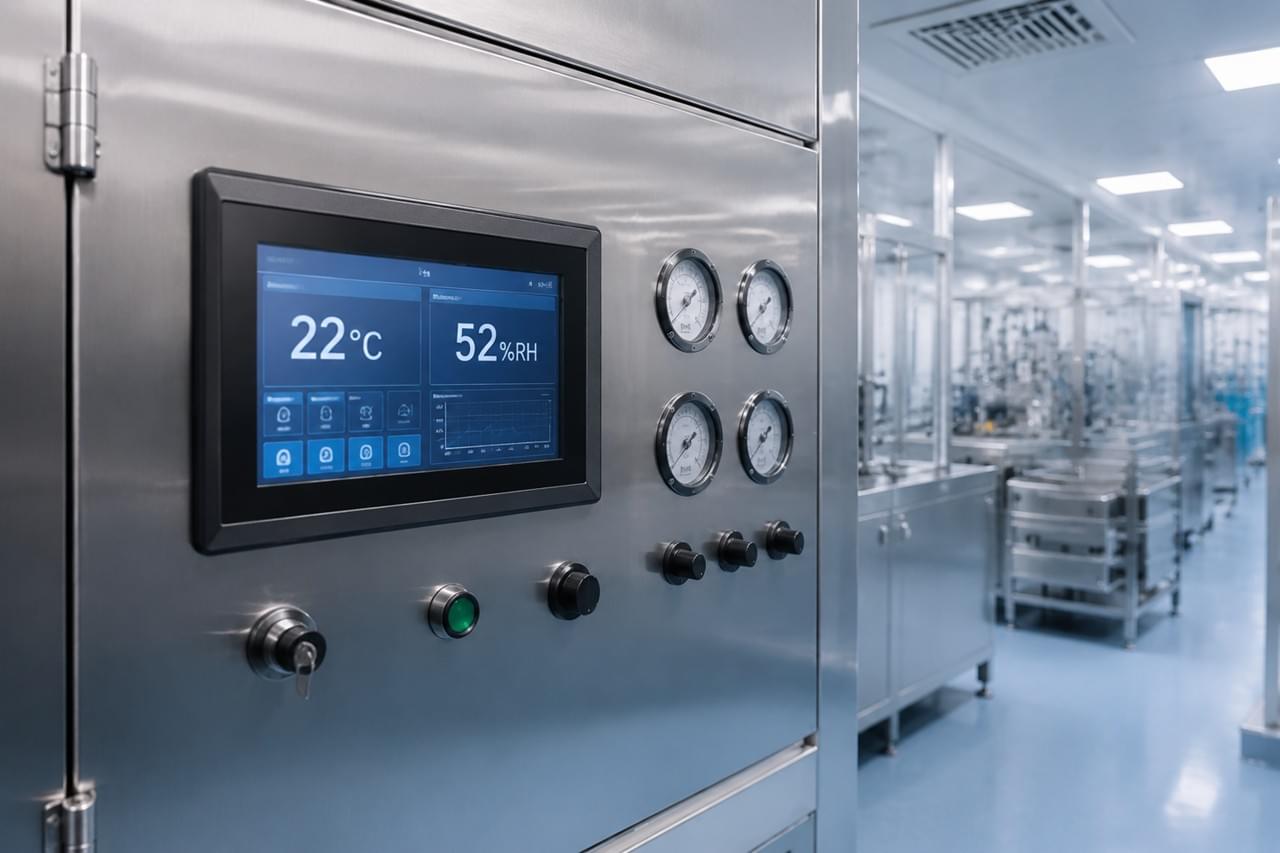
Here is what experienced production teams know that newcomers learn the hard way: capsule filling machine compatibility is as much about the room as it is about the machine. HPMC capsules, in particular, will not meet you halfway on environmental conditions — you either provide what they need, or you accept the scrap rate.
| Parameter | ✅ Recommended Range | 🚨 Critical Action Level |
|---|---|---|
| Temperature | 20–25 °C | Below 18 °C or above 28 °C: pause and correct immediately |
| Relative Humidity | 45–60% RH | Below 35% RH: stop production; implement corrective action before restarting |
| Air Cleanliness | ISO Class 7 or 8 cleanroom | Per GMP facility design and local regulatory requirements |
| Capsule Pre-Conditioning | 12–24 hours at filling conditions | Mandatory for capsules arriving from different storage environments |
Gelatin capsule filling, by comparison, follows the well-established standard of 20 to 25 °C with 45 to 55% RH — conditions most pharmaceutical facilities already maintain. The gap between gelatin and HPMC requirements is not huge on paper, but in practice, that extra 5 to 10 percentage points of RH can make or break an HPMC production campaign.
📦 Storage matters before filling even starts. Store capsules in sealed original packaging at 20 to 25 °C and 45 to 60% RH for at least 12 to 24 hours before they touch the filling machine. This pre-conditioning step brings the capsule shell to equilibrium moisture content for your filling environment, which directly minimizes cracking, sticking, and dimensional drift on the line. For a deeper dive on storage protocols, read our guide on How Storage Conditions Affect Capsule Stability.
🔄 Switching from Gelatin to HPMC? Here’s Your 5-Step Compatibility Protocol
Our technical support team has guided dozens of manufacturers through this exact transition. The biggest mistake we see? Treating it as a simple material swap rather than a structured validation exercise.
Vsun Medical Technical Support’s recommended protocol:
Step 1 — Verify dimensions first. Pull the capsule dimensional data from the Certificate of Analysis and lay it side by side with your machine’s tooling specification sheet. Any mismatch here cascades into every downstream problem.
Step 2 — Start slow. Run your first trial fills at 50% of rated machine speed. Monitor jamming rates, cracking frequency, and fill-weight consistency at every station. Document everything — this data feeds your regulatory dossier.
Step 3 — Lock in the environment. Humidity at 50 to 60% RH, ionization bars active at all capsule handling points. No exceptions and no workarounds.
Step 4 — Ramp with data. Gradually increase to rated speed in increments, with documented performance metrics at each step. If performance degrades at any speed threshold, that is your data-driven operating ceiling — not a guess.
Step 5 — Validate cleaning. Complete a full cleaning validation for the new capsule material. Gelatin and HPMC leave different residues, and your cleaning protocol needs to prove it handles both.
Can the same machine run gelatin and HPMC capsules? Absolutely — many large pharmaceutical manufacturers run both types on the same platform without issue. The keys are: proper cleaning validation between capsule type changeovers as required by GMP, adjustment of environmental humidity controls specific to each material, and operator retraining on HPMC-specific handling characteristics. The machine itself does not care which material you feed it; it cares that the environmental parameters match what the shell material demands.
Do you need hardware modifications? In most cases, no. The adjustments are operational rather than mechanical. But for your pharmaceutical capsule production line optimization, the soft factors — humidity, ionization, pre-conditioning, and operator training — carry as much weight as any hardware change ever could.
If your market segment includes the growing plant-based consumer base, switching to HPMC also opens the door to the vegan and vegetarian capsule market. For more on that opportunity, see our article on HPMC Vegetable Capsules for the Vegan Market.
📊 The Bottom Line
Capsule filling machine compatibility does not need to be a source of ongoing production anxiety. The fundamentals are well understood: match your capsule material properties to your machine’s operating parameters, maintain environmental controls within validated ranges, pre-condition your capsules, and validate thoroughly before scaling to full speed. The manufacturers who struggle are the ones who skip the pre-work; the ones who thrive treat compatibility as a systematic process rather than an afterthought.
Referencing ICH Q6A pharmaceutical specifications testing procedures and WHO Technical Report on pharmaceutical manufacturing during your validation planning ensures your compatibility documentation aligns with international regulatory expectations from day one.
✅ Ready to Optimize Your Capsule Filling Machine Compatibility?
Vsun Medical’s pharmaceutical empty capsules are manufactured to tight dimensional tolerances — the kind that high-speed filling machines actually need, not just the kind that pass spec on paper. Every batch ships with full Certificate of Analysis documentation, GMP-certified production processes, and ISO quality standards baked into our manufacturing workflow.
📋 Request Capsule Specification Documentation → vsunmedical.com/contact
Or browse our full pharmaceutical empty capsules product range to find the right capsule specification for your filling platform and formulation requirements.
GMP Compliant · ISO Certified · Technical Support Available
 English
 Arabic
 German
 French
 Italian
 Spanish
 Russian
 Japanese
 Korean
 Turkish
 Portuguese