
Parte della nostra Guida Completa: Capsule Vuote Farmaceutiche: La Guida Completa alla Selezione
📌 Sintesi Rapida
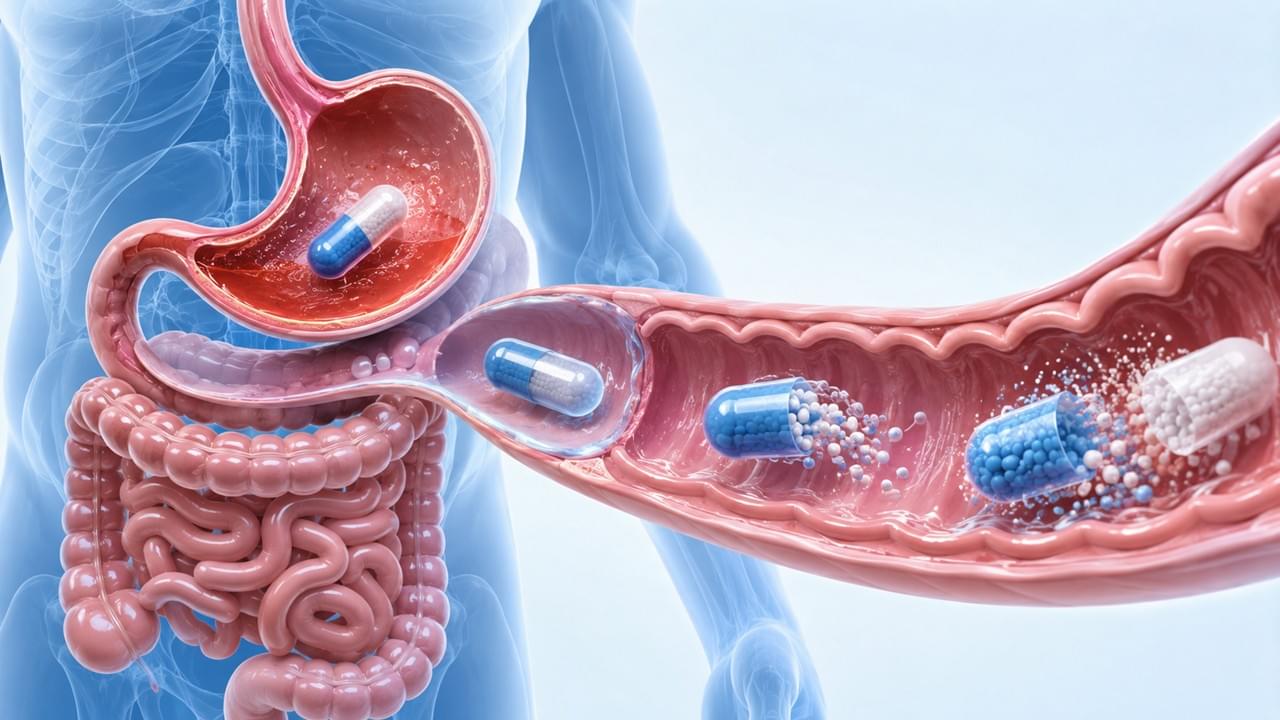
La Tecnologia delle Capsule Enteriche è diventata uno degli approcci più affidabili per proteggere gli ingredienti sensibili all'acido e garantire che i farmaci vengano rilasciati esattamente dove sono necessari. Invece di dissolversi immediatamente dopo l'ingestione, queste capsule appositamente ingegnerizzate rimangono intatte nello stomaco e rilasciano il loro contenuto solo dopo aver raggiunto l'intestino.
Questa guida esplora come funzionano le capsule enteriche, la scienza alla base del meccanismo di rivestimento enterico, i polimeri comunemente usati, le applicazioni cliniche, i test di dissoluzione e le strategie di formulazione pratiche che aiutano i produttori a migliorare le prestazioni del prodotto soddisfacendo al contempo le aspettative normative.
Che cos'è la Tecnologia delle Capsule Enteriche?
La Tecnologia delle Capsule Enteriche si riferisce all'uso di gusci di capsule appositamente progettati o rivestimenti polimerici che resistono all'ambiente altamente acido dello stomaco prima di dissolversi nelle condizioni di pH più elevato dell'intestino tenue.
A differenza delle capsule rigide convenzionali, le capsule enteriche ritardano il rilascio del farmaco fino a quando la capsula non raggiunge la sua posizione prevista all'interno del tratto gastrointestinale. Questa strategia di rilascio controllato è particolarmente preziosa quando il principio attivo farmaceutico (API) si degraderebbe altrimenti nell'acido gastrico o irriterebbe la mucosa dello stomaco.
💡 In parole semplici: la capsula protegge prima il farmaco, quindi lo rilascia precisamente dove l'assorbimento o l'azione terapeutica sono più efficaci.
Il concetto di protezione enterica è emerso originariamente nelle formulazioni in compresse decenni fa. Oggi, i progressi nella produzione farmaceutica hanno reso le capsule enteriche un'opzione preferita per molte forme di dosaggio orale perché semplificano lo sviluppo supportando al contempo tecnologie di riempimento più flessibili.
Diverse sfide di formulazione rendono il rilascio intestinale mirato del farmaco essenziale:
✅ Gli API sensibili all'acido perdono potenza prima dell'assorbimento.
✅ Alcuni farmaci causano una significativa irritazione gastrica se rilasciati troppo presto.
✅ Certe terapie sono destinate ad agire direttamente all'interno dell'intestino piuttosto che nello stomaco.
✅ I probiotici vivi e gli ingredienti biologici richiedono protezione dall'acido gastrico per mantenere la vitalità.
Con l'evoluzione della medicina personalizzata e dei sistemi avanzati di somministrazione orale, le capsule enteriche sono diventate una piattaforma sempre più importante sia per i prodotti farmaceutici che nutraceutici.
🔬 Comprendere il Meccanismo di Rivestimento Enterico
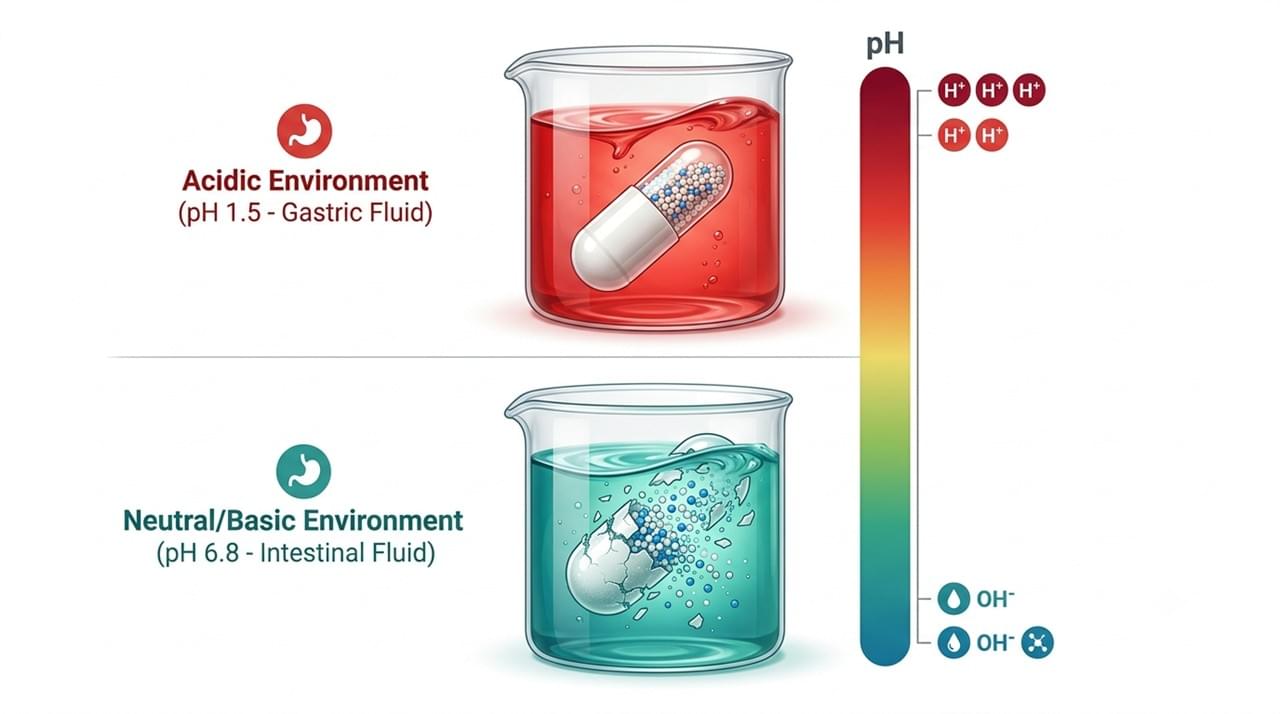
Il fondamento della Tecnologia delle Capsule Enteriche è il meccanismo di rivestimento enterico, che si basa su polimeri pH-sensibili. Questi polimeri rimangono stabili in condizioni acide ma si dissolvono rapidamente una volta che incontrano l'ambiente più alcalino dell'intestino.
Invece di rilasciare l'API immediatamente dopo l'ingestione, il rivestimento funge da barriera protettiva temporanea durante il transito gastrico.
Perché il pH è importante
Lo stomaco mantiene tipicamente un pH tra 1,5 e 3,5, rendendolo altamente acido. Al contrario, l'intestino tenue generalmente varia da pH 5,5 a 7,5, a seconda della posizione.
I polimeri enterici sono attentamente progettati per rispondere solo dopo aver raggiunto una soglia di pH predefinita. Questa dissoluzione selettiva consente un rilascio preciso del farmaco riducendo al contempo l'esposizione non necessaria nello stomaco.
Polimeri Enterici Comuni
| Polimero | pH di Dissoluzione | Applicazione Tipica |
| Eudragit L100 | ≥6,0 | Rilascio nell'intestino tenue |
| Eudragit L100-55 | ≥5,5 | Rilascio intestinale precoce |
| Eudragit S100 | ≥7,0 | Formulazioni mirate al colon |
| HPMCP | 5.0–5.5 | Rilascio duodenale |
| CAP | ≥6,0 | Rivestimento enterico tradizionale |
| PVAP | ≥5,0 | Sistemi enterici alternativi |
La selezione del polimero appropriato influenza direttamente il luogo di rilascio del farmaco, rendendo la scelta del polimero una delle decisioni di formulazione più critiche durante lo sviluppo del prodotto.
📖 Per gli sviluppatori che lavorano su strategie di somministrazione orale più ampie, la nostra Guida alle Soluzioni di Rilascio Farmacologico Mirato fornisce ulteriori considerazioni di formulazione per sistemi di rilascio farmacologico di precisione.
⚙️ Capsule Enteriche vs. Compresse con Rivestimento Enterico
Sebbene entrambe le forme di dosaggio siano progettate per ritardare il rilascio del farmaco fino all'intestino, le capsule enteriche offrono diversi vantaggi pratici durante la formulazione e la produzione.
| Caratteristica | Compressa con Rivestimento Enterico | Capsula Enterica |
| Materiali di Riempimento | Principalmente polveri compresse | Polveri, pellet, granuli, liquidi, semi-solidi |
| Complessità di sviluppo | Maggiore | Inferiore |
| Stress meccanico | Compressione richiesta | Minimale |
| Flessibilità di formulazione | Moderato | Eccellenti |
| Esperienza del paziente | Potrebbe essere più difficile da deglutire | Spesso più facili da deglutire |
Per molte formulazioni moderne, le capsule offrono una maggiore flessibilità di sviluppo perché eliminano lo stress legato alla compressione, supportando al contempo molteplici formati di riempimento.
Questa flessibilità è particolarmente preziosa quando si lavora con API sensibili, pellet a rilascio modificato o prodotti combinati complessi.
I produttori possono anche accorciare i tempi di sviluppo riempiendo direttamente le capsule invece di ottimizzare i parametri di compressione delle compresse.
💊 Principali Applicazioni Cliniche della Tecnologia delle Capsule Enteriche
Il valore della Tecnologia delle Capsule Enteriche va ben oltre la protezione dei farmaci dall'acido gastrico. Permette anche risultati terapeutici più prevedibili, somministrando i farmaci dove possono agire in modo più efficace.
Inibitori della Pompa Protonica (IPP)
Gli inibitori di pompa protonica come l'omeprazolo e il pantoprazolo si degradano rapidamente in ambienti acidi. Le capsule enteriche prevengono la degradazione prematura durante il transito gastrico, permettendo al farmaco di raggiungere l'intestino tenue prima della dissoluzione.
Senza protezione acido-resistente, questi farmaci perderebbero gran parte della loro efficacia terapeutica.
FANS
I farmaci antinfiammatori non steroidei possono irritare la mucosa gastrica se rilasciati troppo presto.
L'uso di capsule farmaceutiche acido-resistenti aiuta a ritardare la dissoluzione fino a quando il farmaco non raggiunge l'intestino, riducendo l'esposizione gastrica diretta e migliorando la tolleranza del paziente.
Sebbene la protezione enterica non possa eliminare ogni effetto collaterale gastrointestinale, rimane una strategia importante per minimizzare l'irritazione gastrica.
Terapia di Sostituzione Enzimatica Pancreatica
I preparati di enzimi digestivi devono sopravvivere all'acido gastrico prima di raggiungere il duodeno.
Le capsule enteriche aiutano a preservare l'attività enzimatica durante il transito nello stomaco, assicurando che gli enzimi diventino disponibili dove avviene effettivamente la digestione.
Per i pazienti che richiedono una terapia sostitutiva con enzimi pancreatici, una somministrazione intestinale affidabile è essenziale per il successo del trattamento.
Probiotici e Bioterapici Vivi
Molti microrganismi benefici sono estremamente sensibili all'acido gastrico.
Utilizzando La Tecnologia delle Capsule Enteriche, i produttori possono migliorare significativamente la sopravvivenza batterica attraverso lo stomaco, permettendo a più organismi vitali di raggiungere l'intestino.
Questo approccio di somministrazione è sempre più importante per i probiotici, le terapie del microbioma e i prodotti bioterapeutici vivi di nuova generazione.
Per formulazioni che richiedono una permeabilità all'ossigeno ancora più bassa, gli sviluppatori spesso valutano Capsula di Pullulano: Barriera all'Ossigeno per Nutraceutici insieme a soluzioni enteriche per migliorare ulteriormente la stabilità del prodotto.
Terapia Anti-Infettiva Mirata
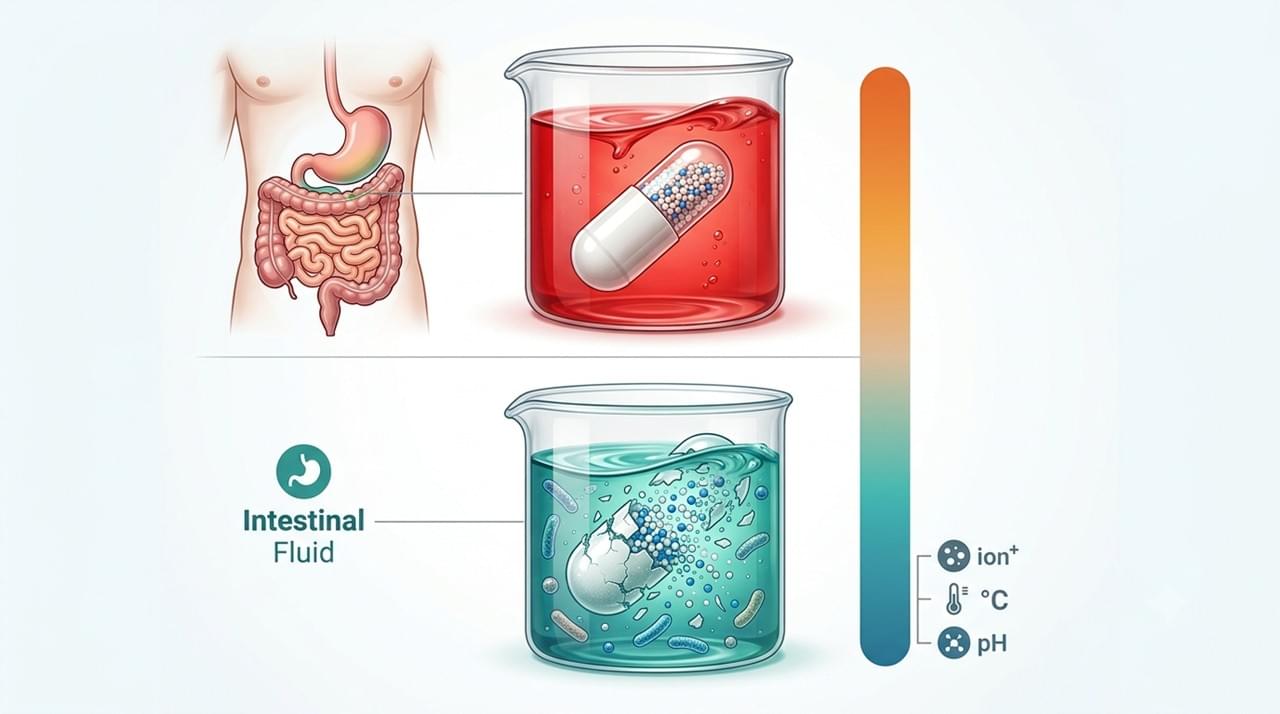
Alcuni farmaci anti-infettivi sono progettati per agire principalmente all'interno dell'intestino piuttosto che in tutto il corpo. In questi casi, La Tecnologia delle Capsule Enteriche supporta il rilascio intestinale mirato del farmaco, consentendo a concentrazioni più elevate del farmaco di raggiungere il sito dell'infezione, minimizzando al contempo l'esposizione sistemica non necessaria.
Esempi includono terapie per infezioni batteriche gastrointestinali e condizioni infiammatorie intestinali, dove la somministrazione localizzata può migliorare l'efficienza terapeutica e ridurre gli effetti collaterali indesiderati.
Con la crescente attenzione verso i farmaci mirati al microbioma e le terapie orali di precisione, i sistemi di capsule enteriche continuano a svolgere un ruolo sempre più importante nello sviluppo farmaceutico moderno.
🧪 Valutazione delle Prestazioni delle Capsule Enteriche
Lo sviluppo di una capsula enterica efficace implica molto più della semplice selezione del giusto polimero di rivestimento. I produttori devono anche dimostrare che la capsula resista costantemente alle condizioni gastriche prima di rilasciare il suo contenuto nell'intestino.
Questo viene tipicamente verificato attraverso test di dissoluzione standardizzati specificati dalle principali farmacopee.
Gli standard industriali pubblicati dalla Punto di forza unico e da altre organizzazioni regolatorie contribuiscono a garantire che le forme di dosaggio enteriche offrano prestazioni affidabili e riproducibili in condizioni gastrointestinali simulate.
Fase 1 — Ambiente Gastrico Simulato
Durante la prima fase, le capsule sono esposte a fluido gastrico simulato per circa due ore.
Gli obiettivi chiave includono:
✅ Il guscio della capsula rimane intatto
✅ Rilascio minimo di API
✅ Nessun difetto di rivestimento o perdita
Una capsula enterica efficace dovrebbe rilasciare solo una quantità molto piccola di farmaco durante questa fase, dimostrando un'adeguata resistenza agli acidi.
Fase 2 — Ambiente Intestinale Simulato
Dopo la fase acida, le capsule vengono trasferite in un tampone fosfato che mima le condizioni intestinali.
A questo punto, il rivestimento dovrebbe dissolversi in modo efficiente, consentendo un rapido rilascio del farmaco.
I prodotti di successo generalmente dimostrano:
✔️ Rapida dissoluzione del rivestimento
✔️ Apertura completa della capsula
✔️ Rilascio efficiente di API
Insieme, queste due fasi verificano che la formulazione si comporti esattamente come previsto durante tutto il transito gastrointestinale.
Per i produttori che preparano sottomissioni regolatorie, seguire gli standard di dissoluzione riconosciuti pubblicati dalla Punto di forza unico e il Database FDA dei Metodi di Dissoluzione aiuta a stabilire la qualità del prodotto e la fiducia normativa.
Riferimenti utili:
- Capitolo Generale USP : https://www.usp.org
- Database dei Metodi di Dissoluzione FDA: https://www.accessdata.fda.gov/scripts/cder/dissolution/
🌿 Scegliere tra Capsule Enteriche in Gelatina ed Enteriche in HPMC
La scelta della base della capsula è altrettanto importante quanto la scelta del rivestimento enterico stesso. Sia le capsule in gelatina che quelle in HPMC possono raggiungere eccellenti prestazioni enteriche, ma ciascuna offre vantaggi di formulazione unici.
| Considerazione | Gelatina Enterica | HPMC Enterica |
| Preferenza del Consumatore | Prodotti farmaceutici tradizionali | Prodotti vegani e vegetariani |
| Contenuto di umidità | Maggiore | Inferiore |
| Rischio di reticolazione | Possibile | Minimale |
| Costo | Inferiore | Moderato |
| Tendenza di Mercato | Tecnologia matura | In rapida crescita |
Per molte formulazioni farmaceutiche e nutraceutiche moderne, capsule farmaceutiche acido-resistenti a base di HPMC sono diventate sempre più attraenti perché combinano un posizionamento a base vegetale con un'eccellente stabilità della formulazione.
Le capsule in HPMC sono anche ampiamente utilizzate per ingredienti sensibili all'umidità e formulazioni probiotiche che richiedono prestazioni di conservazione migliorate.
Se il vostro portafoglio prodotti include integratori vegani o con etichetta pulita, le capsule in HPMC offrono spesso un maggiore appeal di mercato mantenendo al contempo una funzionalità enterica affidabile.
💡 Suggerimenti Esperti per la Formulazione per Migliori Prestazioni delle Capsule Enteriche
Anche quando è stato selezionato un polimero enterico appropriato, il successo della formulazione dipende in ultima analisi da un attento controllo del processo.
Scienziati esperti nella formulazione prestano spesso molta attenzione a diversi fattori critici:
✔️ Garantire una Copertura Completa della Giunzione
La giunzione tra il corpo e il cappuccio della capsula è uno dei punti deboli più comuni.
Qualsiasi discontinuità nel rivestimento può consentire all'acido gastrico di penetrare prematuramente, con conseguente rilascio precoce del farmaco.
✔️ Ottimizzare lo Spessore del Rivestimento
L'applicazione di un rivestimento eccessivamente sottile può compromettere la resistenza agli acidi, mentre un rivestimento eccessivamente spesso può ritardare la dissoluzione oltre il bersaglio intestinale previsto.
Trovare il giusto equilibrio è essenziale per ottenere prestazioni riproducibili.
✔️ Controllare i Parametri di Produzione
Velocità di spruzzatura costante, dimensione delle goccioline, temperatura dell'aria in ingresso, condizioni di essiccazione e tempo di polimerizzazione influenzano tutti la qualità del rivestimento.
Mantenere uno stretto controllo del processo migliora la coerenza tra i lotti e riduce la variabilità di produzione.
✔️ Validare Ogni Lotto
I test di qualità di routine dovrebbero includere:
- Valutazione della resistenza agli acidi
- Test di dissoluzione
- Uniformità del rivestimento
- Ispezione delle perdite
- Valutazione della stabilità
La convalida precoce aiuta a identificare i problemi di formulazione prima dell'inizio della produzione commerciale, riducendo i rischi di sviluppo e i ritardi normativi.
📦 Considerazioni su Conservazione e Stabilità
Mentre i rivestimenti enterici proteggono efficacemente le formulazioni durante il transito gastrointestinale, la stabilità a lungo termine del prodotto dipende da molteplici fattori aggiuntivi.
Per i prodotti sensibili all'umidità o all'ossigeno, i produttori dovrebbero anche considerare:
- Ambienti di produzione a bassa umidità
- Imballaggio con barriera all'ossigeno
- Flushing con azoto, ove appropriato
- Temperatura di conservazione controllata
- Materiali per capsule resistenti all'umidità
In particolare per le formulazioni probiotiche, la combinazione della protezione enterica con un imballaggio ottimizzato migliora significativamente la durata di conservazione e la qualità del prodotto.
📖 Domande Frequenti
Le capsule enteriche possono proteggere i probiotici durante la conservazione?
Essi forniscono un'eccellente protezione durante il transito gastrico, ma la stabilità a lungo termine richiede strategie di imballaggio aggiuntive come il controllo dell'umidità, la gestione dell'ossigeno e materiali per capsule idonei come HPMC o pullulano.
Tutti i rivestimenti enterici sono uguali?
No. Polimeri diversi si dissolvono a diversi livelli di pH e mostrano proprietà meccaniche e chimiche uniche. La selezione del polimero corretto dovrebbe sempre essere supportata da studi di formulazione e dati di dissoluzione, piuttosto che dal solo costo.
Qual è la differenza tra capsule con rivestimento enterico e capsule riempite con pellet con rivestimento enterico?
Una capsula con rivestimento enterico applica lo strato protettivo all'esterno della capsula assemblata.
Una capsula riempita di pellet contiene pellet rivestiti individualmente all'interno di un guscio di capsula convenzionale.
I sistemi a pellet generalmente forniscono una distribuzione gastrointestinale più uniforme, mentre le capsule con rivestimento enterico offrono un processo di produzione più semplice con una minore complessità di produzione.
🤝 Collabora con Vsun Medical per Soluzioni Affidabili di Capsule Enteriche
Lo sviluppo di forme di dosaggio enteriche ad alte prestazioni richiede più che materie prime di qualità—richiede esperienza nella produzione, sistemi di qualità convalidati e un supporto tecnico affidabile.
A Vsun Medica, forniamo soluzioni di capsule enteriche conformi alle GMP sia in formato gelatina che HPMC, supportate da documentazione tecnica completa, convalida della dissoluzione e supporto normativo per i produttori farmaceutici globali.
Sia che stiate sviluppando API sensibili agli acidi, prodotti probiotici, nutraceutici a rilascio ritardato o sistemi avanzati di somministrazione orale di farmaci, la scelta del partner giusto per le capsule può migliorare significativamente l'efficienza dello sviluppo e la coerenza del prodotto.
👉 Esplora la nostra Capsule Vuote Farmaceutiche per saperne di più sulle soluzioni di capsule disponibili.
📩 Richiedete le specifiche tecniche o discutete le vostre esigenze di formulazione qui:
https://www.vsunmedical.com/contact
La Tecnologia delle Capsule Enteriche è diventata una piattaforma essenziale per la moderna somministrazione orale di farmaci perché combina il rilascio mirato, una migliore protezione dell'API e una maggiore flessibilità di formulazione all'interno di un'unica forma di dosaggio.
Poiché l'innovazione farmaceutica si concentra sempre più su medicina di precisione, farmaci biologici, probiotici e terapie orali avanzate, le capsule enteriche continueranno a supportare strategie di somministrazione dei farmaci più sicure, più efficaci e più a misura di paziente.
Comprendendo il meccanismo di rivestimento enterico, selezionando le appropriate capsule farmaceutiche acido-resistenti, e validando le prestazioni attraverso test di dissoluzione standardizzati, i formulato possono sviluppare prodotti che soddisfano sia le aspettative normative che le esigenze cliniche del mondo reale.
Per una comprensione più ampia delle strategie di selezione delle capsule, continua a leggere il nostro Capsule Vuote Farmaceutiche: La Guida Completa alla Selezione, dove confrontiamo materiali delle capsule, tecnologie di produzione e considerazioni sulla formulazione in un'ampia gamma di applicazioni farmaceutiche.
 English
 Arabic
 German
 French
 Italian
 Spanish
 Russian
 Japanese
 Korean
 Turkish
 Portuguese