
Part of our Complete Guide: Pharmaceutical Empty Capsules: The Complete Selection Guide
📌 Quick Summary
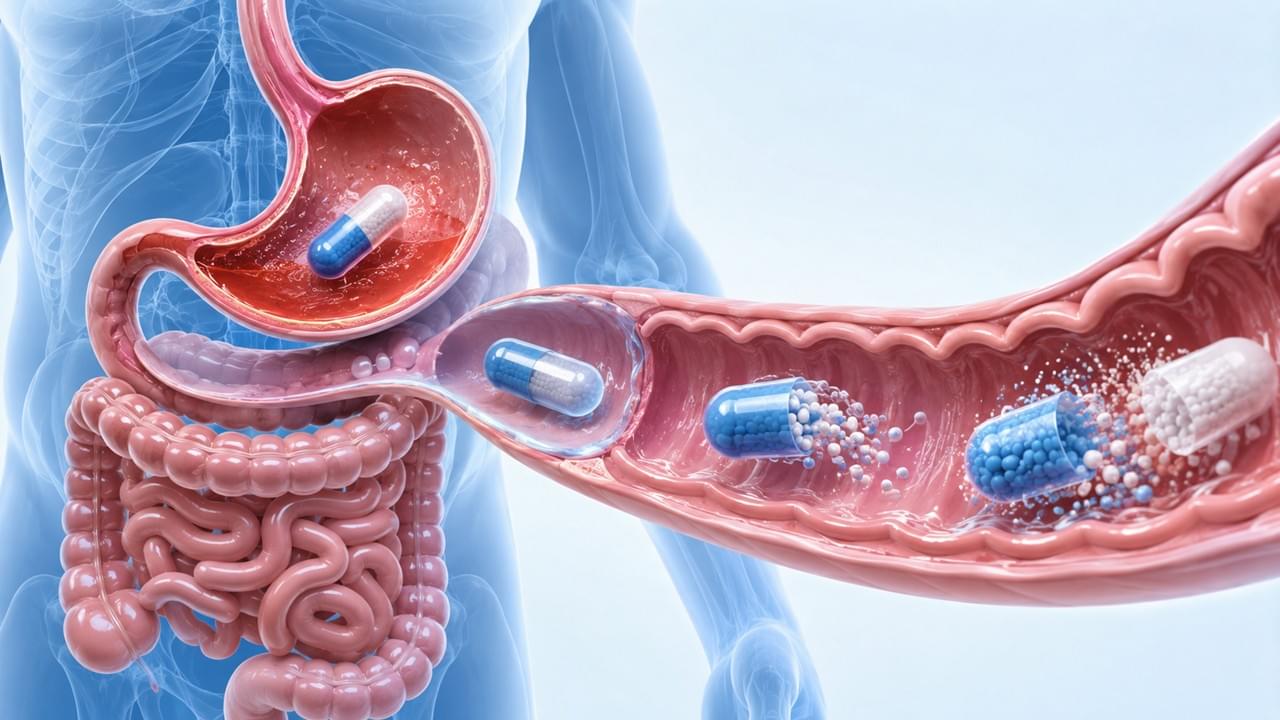
Enteric Capsule Technology has become one of the most reliable approaches for protecting acid-sensitive ingredients and ensuring drugs are released exactly where they are needed. Instead of dissolving immediately after swallowing, these specially engineered capsules remain intact in the stomach and release their contents only after reaching the intestine.
This guide explores how enteric capsules work, the science behind the enteric coating mechanism, commonly used polymers, clinical applications, dissolution testing, and practical formulation strategies that help manufacturers improve product performance while meeting regulatory expectations.
What Is Enteric Capsule Technology?
Enteric Capsule Technology refers to the use of specially designed capsule shells or polymer coatings that resist the highly acidic environment of the stomach before dissolving in the higher pH conditions of the small intestine.
Unlike conventional hard capsules, enteric capsules delay drug release until the capsule reaches its intended location within the gastrointestinal tract. This controlled release strategy is especially valuable when the active pharmaceutical ingredient (API) would otherwise degrade in gastric acid or irritate the stomach lining.
💡 Simply put: the capsule protects the medicine first, then delivers it precisely where absorption or therapeutic action is most effective.
The concept of enteric protection originally emerged in tablet formulations decades ago. Today, advances in pharmaceutical manufacturing have made enteric capsules a preferred option for many oral dosage forms because they simplify development while supporting more flexible filling technologies.
Several formulation challenges make targeted intestinal drug release essential:
✅ Acid-sensitive APIs lose potency before absorption.
✅ Some medications cause significant gastric irritation when released too early.
✅ Certain therapies are intended to act directly inside the intestine rather than the stomach.
✅ Live probiotics and biological ingredients require protection from gastric acid to maintain viability.
As personalized medicine and advanced oral delivery systems continue to evolve, enteric capsules have become an increasingly important platform for both pharmaceutical and nutraceutical products.
🔬 Understanding the Enteric Coating Mechanism
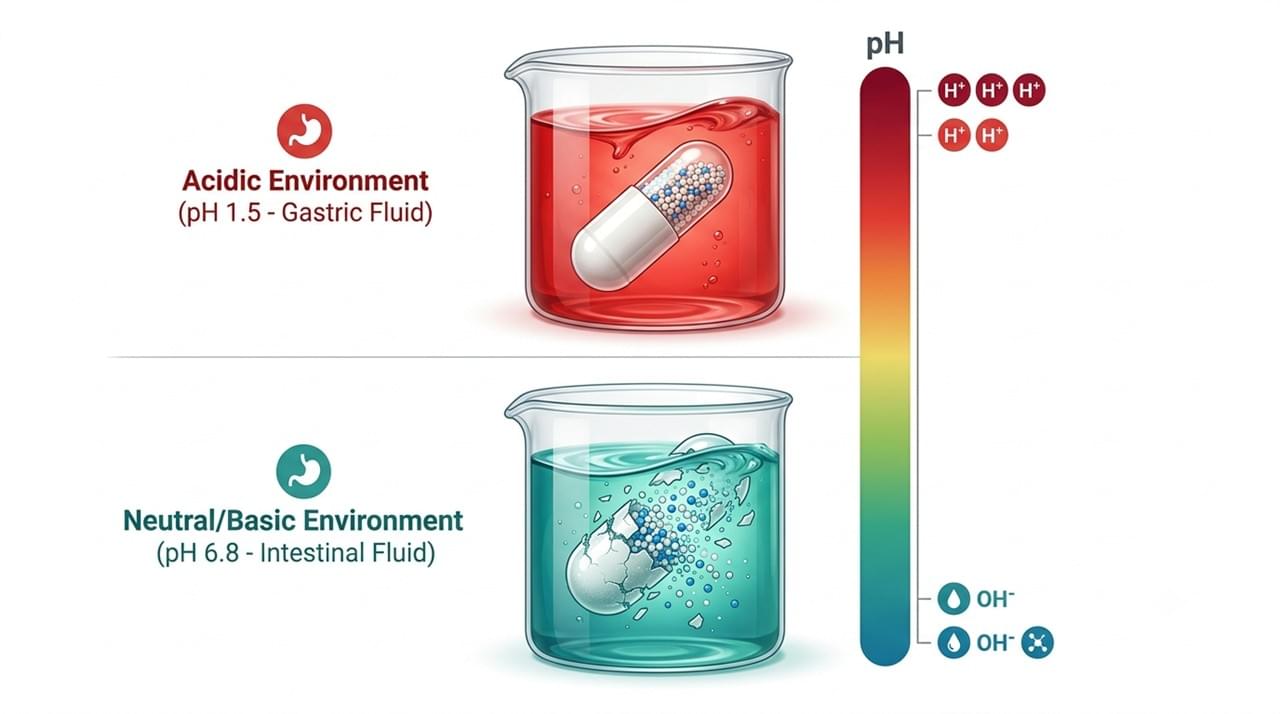
The foundation of Enteric Capsule Technology is the enteric coating mechanism, which relies on pH-responsive polymers. These polymers remain stable in acidic conditions but dissolve rapidly once they encounter the more alkaline environment of the intestine.
Instead of releasing the API immediately after ingestion, the coating serves as a temporary protective barrier throughout gastric transit.
Why pH Matters
The stomach typically maintains a pH between 1.5 and 3.5, making it highly acidic. In contrast, the small intestine generally ranges from pH 5.5 to 7.5, depending on the location.
Enteric polymers are carefully engineered to respond only after reaching a predefined pH threshold. This selective dissolution enables precise drug delivery while reducing unnecessary exposure in the stomach.
Common Enteric Polymers
| Polymer | Dissolution pH | Typical Application |
| Eudragit L100 | ≥6.0 | Small intestine delivery |
| Eudragit L100-55 | ≥5.5 | Earlier intestinal release |
| Eudragit S100 | ≥7.0 | Colon-targeted formulations |
| HPMCP | 5.0–5.5 | Duodenal release |
| CAP | ≥6.0 | Traditional enteric coating |
| PVAP | ≥5.0 | Alternative enteric systems |
Selecting the appropriate polymer directly influences where the drug is released, making polymer choice one of the most critical formulation decisions during product development.
📖 For developers working on broader oral delivery strategies, our Targeted Drug Delivery Solutions Guide provides additional formulation considerations for precision drug delivery systems.
⚙️ Enteric Capsules vs. Enteric-Coated Tablets
Although both dosage forms are designed to delay drug release until the intestine, enteric capsules offer several practical advantages during formulation and manufacturing.
| Feature | Enteric-Coated Tablet | Enteric Capsule |
| Fill Materials | Mainly compressed powders | Powders, pellets, granules, liquids, semi-solids |
| Development Complexity | Higher | Lower |
| Mechanical Stress | Compression required | Minimal |
| Formulation Flexibility | Moderate | Excellent |
| Patient Experience | May be harder to swallow | Often easier to swallow |
For many modern formulations, capsules provide greater development flexibility because they eliminate compression-related stress while supporting multiple fill formats.
This flexibility is especially valuable when working with sensitive APIs, modified-release pellets, or complex combination products.
Manufacturers can also shorten development timelines by filling capsules directly instead of optimizing tablet compression parameters.
💊 Major Clinical Applications of Enteric Capsule Technology
The value of Enteric Capsule Technology extends well beyond protecting medicines from stomach acid. It also enables more predictable therapeutic outcomes by delivering drugs where they can perform most effectively.
1. Proton Pump Inhibitors (PPIs)
Proton pump inhibitors such as omeprazole and pantoprazole degrade rapidly in acidic environments. Enteric capsules prevent premature degradation during gastric transit, allowing the medication to reach the small intestine before dissolution.
Without acid-resistant protection, these drugs would lose much of their therapeutic effectiveness.
2. NSAIDs
Non-steroidal anti-inflammatory drugs can irritate the stomach lining when released too early.
Using acid-resistant pharmaceutical capsules helps delay dissolution until the drug reaches the intestine, reducing direct gastric exposure and improving patient tolerance.
Although enteric protection cannot eliminate every gastrointestinal side effect, it remains an important strategy for minimizing stomach irritation.
3. Pancreatic Enzyme Replacement Therapy
Digestive enzyme preparations must survive gastric acid before reaching the duodenum.
Enteric capsules help preserve enzyme activity during stomach transit, ensuring enzymes become available where digestion actually occurs.
For patients requiring pancreatic enzyme replacement therapy, reliable intestinal delivery is essential for treatment success.
4. Probiotics and Live Biotherapeutics
Many beneficial microorganisms are extremely sensitive to gastric acid.
By using Enteric Capsule Technology, manufacturers can significantly improve bacterial survival through the stomach, allowing more viable organisms to reach the intestine.
This delivery approach is increasingly important for probiotics, microbiome therapies, and next-generation live biotherapeutic products.
For formulations requiring even lower oxygen permeability, developers often evaluate Pullulan Capsule: Oxygen Barrier for Nutraceuticals alongside enteric solutions to further enhance product stability.
5. Targeted Anti-Infective Therapy
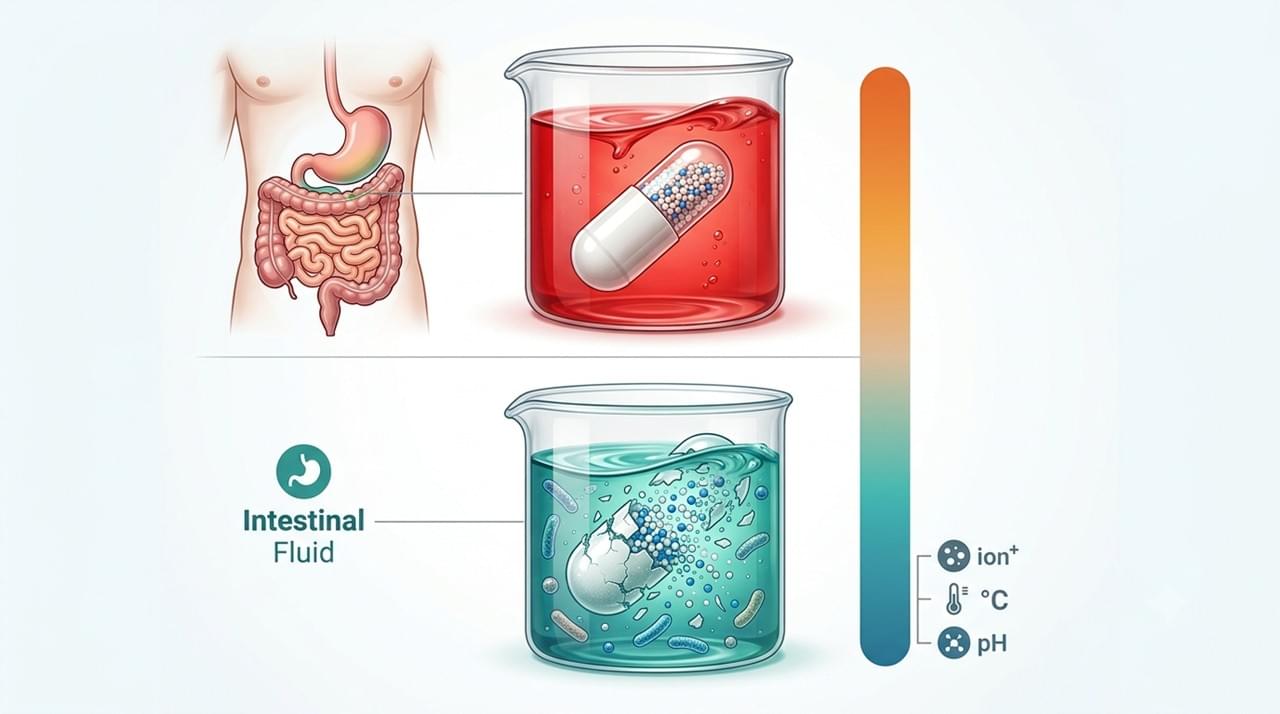
Certain anti-infective drugs are designed to work primarily within the intestine rather than throughout the entire body. In these cases, Enteric Capsule Technology supports targeted intestinal drug release, allowing higher drug concentrations to reach the infection site while minimizing unnecessary systemic exposure.
Examples include therapies for gastrointestinal bacterial infections and inflammatory bowel conditions, where localized delivery can improve therapeutic efficiency and reduce unwanted side effects.
As interest grows in microbiome-targeted medicines and precision oral therapies, enteric capsule systems continue to play an increasingly important role in modern pharmaceutical development.
🧪 Evaluating Enteric Capsule Performance
Developing an effective enteric capsule involves far more than selecting the right coating polymer. Manufacturers must also demonstrate that the capsule consistently withstands gastric conditions before releasing its contents in the intestine.
This is typically verified through standardized dissolution testing specified by major pharmacopeias.
Industry standards published by the USP and other regulatory organizations help ensure that enteric dosage forms deliver reliable and reproducible performance under simulated gastrointestinal conditions.
Stage 1 — Simulated Gastric Environment
During the first stage, capsules are exposed to simulated gastric fluid for approximately two hours.
Key objectives include:
✅ Capsule shell remains intact
✅ Minimal API release
✅ No coating defects or leakage
An effective enteric capsule should release only a very small amount of drug during this phase, demonstrating adequate acid resistance.
Stage 2 — Simulated Intestinal Environment
After the acid stage, capsules are transferred into a phosphate buffer that mimics intestinal conditions.
At this point, the coating should dissolve efficiently, allowing rapid drug release.
Successful products generally demonstrate:
✔️ Fast coating dissolution
✔️ Complete capsule opening
✔️ Efficient API release
Together, these two stages verify that the formulation performs exactly as intended throughout gastrointestinal transit.
For manufacturers preparing regulatory submissions, following recognized dissolution standards published by the USP and the FDA Dissolution Methods Database helps establish product quality and regulatory confidence.
Useful references:
- USP General Chapter <711>: https://www.usp.org
- FDA Dissolution Methods Database: https://www.accessdata.fda.gov/scripts/cder/dissolution/
🌿 Choosing Between Enteric Gelatin and Enteric HPMC Capsules
Selecting the capsule base is just as important as selecting the enteric coating itself. Both gelatin and HPMC capsules can achieve excellent enteric performance, but each offers unique formulation advantages.
| Consideration | Enteric Gelatin | Enteric HPMC |
| Consumer Preference | Traditional pharmaceutical products | Vegan & vegetarian products |
| Moisture Content | Higher | Lower |
| Cross-linking Risk | Possible | Minimal |
| Cost | Lower | Moderate |
| Market Trend | Mature technology | Rapidly growing |
For many modern pharmaceutical and nutraceutical formulations, acid-resistant pharmaceutical capsules based on HPMC have become increasingly attractive because they combine plant-based positioning with excellent formulation stability.
HPMC capsules are also widely used for moisture-sensitive ingredients and probiotic formulations that require improved storage performance.
If your product portfolio includes vegan or clean-label supplements, HPMC capsules often provide greater market appeal while maintaining reliable enteric functionality.
💡 Expert Formulation Tips for Better Enteric Capsule Performance
Even when an appropriate enteric polymer has been selected, formulation success ultimately depends on careful process control.
Experienced formulation scientists often pay close attention to several critical factors:
✔️ Ensure Complete Seam Coverage
The junction between the capsule body and cap is one of the most common weak points.
Any discontinuity in the coating can allow gastric acid to penetrate prematurely, resulting in early drug release.
✔️ Optimize Coating Thickness
Applying an excessively thin coating may compromise acid resistance, while an overly thick coating can delay dissolution beyond the intended intestinal target.
Finding the correct balance is essential for achieving reproducible performance.
✔️ Control Manufacturing Parameters
Consistent spray rate, droplet size, inlet air temperature, drying conditions, and curing time all influence coating quality.
Maintaining tight process control improves batch-to-batch consistency and reduces manufacturing variability.
✔️ Validate Every Batch
Routine quality testing should include:
- Acid resistance evaluation
- Dissolution testing
- Coating uniformity
- Leakage inspection
- Stability assessment
Early validation helps identify formulation issues before commercial production begins, reducing development risks and regulatory delays.
📦 Storage and Stability Considerations
While enteric coatings effectively protect formulations during gastrointestinal transit, long-term product stability depends on multiple additional factors.
For moisture- or oxygen-sensitive products, manufacturers should also consider:
- Low-humidity production environments
- Oxygen barrier packaging
- Nitrogen flushing where appropriate
- Controlled storage temperature
- Moisture-resistant capsule materials
For probiotic formulations in particular, combining enteric protection with optimized packaging significantly improves shelf-life and product quality.
📖 Frequently Asked Questions
Can enteric capsules protect probiotics during storage?
They provide excellent protection during gastric transit, but long-term stability requires additional packaging strategies such as moisture control, oxygen management, and suitable capsule materials like HPMC or pullulan.
Are all enteric coatings the same?
No. Different polymers dissolve at different pH levels and exhibit unique mechanical and chemical properties. Selecting the correct polymer should always be supported by formulation studies and dissolution data rather than cost alone.
What is the difference between enteric-coated capsules and capsules filled with enteric-coated pellets?
An enteric-coated capsule applies the protective layer to the outside of the assembled capsule.
A pellet-filled capsule contains individually coated pellets inside a conventional capsule shell.
Pellet systems generally provide more uniform gastrointestinal distribution, while enteric-coated capsules offer a simpler manufacturing process with lower production complexity.
🤝 Partner with Vsun Medical for Reliable Enteric Capsule Solutions
Developing high-performance enteric dosage forms requires more than quality raw materials—it demands manufacturing expertise, validated quality systems, and dependable technical support.
At Vsun Medical, we supply GMP-compliant enteric capsule solutions in both gelatin and HPMC formats, backed by comprehensive technical documentation, dissolution validation, and regulatory support for global pharmaceutical manufacturers.
Whether you’re developing acid-sensitive APIs, probiotic products, delayed-release nutraceuticals, or advanced oral drug delivery systems, selecting the right capsule partner can significantly improve development efficiency and product consistency.
👉 Explore our Pharmaceutical Empty Capsules to learn more about available capsule solutions.
📩 Request technical specifications or discuss your formulation requirements here:
https://www.vsunmedical.com/contact
Enteric Capsule Technology has become an essential platform for modern oral drug delivery because it combines targeted release, improved API protection, and greater formulation flexibility within a single dosage form.
As pharmaceutical innovation increasingly focuses on precision medicine, biologics, probiotics, and advanced oral therapies, enteric capsules will continue to support safer, more effective, and more patient-friendly drug delivery strategies.
By understanding the enteric coating mechanism, selecting appropriate acid-resistant pharmaceutical capsules, and validating performance through standardized dissolution testing, formulators can build products that satisfy both regulatory expectations and real-world clinical needs.
For a broader understanding of capsule selection strategies, continue reading our Pharmaceutical Empty Capsules: The Complete Selection Guide, where we compare capsule materials, manufacturing technologies, and formulation considerations across a wide range of pharmaceutical applications.
 English
 Arabic
 German
 French
 Italian
 Spanish
 Russian
 Japanese
 Korean
 Turkish
 Portuguese