

Pharmaceutical empty capsules remain one of the most widely used oral dosage forms in the pharmaceutical and nutraceutical industries. Whether you’re producing prescription medications, dietary supplements, probiotics, or herbal formulations, selecting the right capsule shell can significantly impact product stability, dissolution performance, consumer acceptance, and regulatory compliance.
For formulators, procurement managers, and contract manufacturers, understanding the differences between capsule materials is essential. This guide explores the major types of pharmaceutical empty capsules, compares their properties, and explains how to choose the best option for your formulation while working with a reliable empty capsules manufacturer.
What Are Pharmaceutical Empty Capsules?
Pharmaceutical empty capsules are pre-formed shell containers designed to hold powders, granules, pellets, semi-solids, or liquid formulations. They provide a convenient and precise dosage format that is widely accepted by both healthcare professionals and consumers.
The primary functions of pharmaceutical empty capsules include:
✅ Accurate dosing
✅ Protection of active ingredients from environmental factors
✅ Taste and odor masking
✅ Improved patient compliance
✅ Controlled or targeted drug release
Compared with tablets, capsules often provide greater formulation flexibility and can accommodate ingredients that are difficult to compress into solid tablet forms.
Types of Pharmaceutical Empty Capsules
Choosing the appropriate capsule shell begins with understanding the characteristics of the four major capsule categories available today.
🔬 Gelatin Capsules: The Traditional Industry Standard
Gelatin capsules have dominated pharmaceutical manufacturing for more than a century. Produced from purified collagen derived from bovine or porcine sources, they continue to be the most cost-effective capsule option.
Key Advantages
- Fast dissolution in gastric fluid
- Excellent mechanical strength
- Broad compatibility with filling equipment
- Wide availability of colors and opacity options
- Lower manufacturing costs
Gelatin capsules typically contain moisture levels between 13% and 16%, which helps maintain flexibility and durability during processing.
Gelatin vs Vegetable Capsules: Which Is Better?
One of the most common questions manufacturers ask is whether gelatin or vegetable capsules are the better choice.
When comparing gelatin vs vegetable capsules, the answer depends on the intended application. Gelatin capsules offer excellent affordability and rapid dissolution, making them ideal for many pharmaceutical products. Vegetable capsules, however, provide advantages for vegan consumers and moisture-sensitive formulations.
Best Applications
- Prescription medications
- OTC products
- Standard vitamin supplements
- Cost-sensitive formulations
🌱 HPMC Capsules: The Leading Vegetarian Alternative
HPMC (Hydroxypropyl Methylcellulose) capsules, often called vegetable capsules, are produced from plant-derived cellulose.
As consumer demand for clean-label and plant-based products continues to grow, HPMC capsules have become increasingly popular in both pharmaceutical and nutraceutical markets.
Key Advantages
- Suitable for vegetarian and vegan consumers
- Lower moisture content (4–6%)
- Better stability under varying humidity conditions
- Excellent compatibility with moisture-sensitive ingredients
- Halal and kosher friendly
Because of their lower water content, HPMC capsules are particularly useful for probiotics, enzymes, herbal extracts, and hygroscopic APIs.
Are HPMC Capsules Compatible with Filling Machines?
Yes. Most modern capsule filling equipment can process HPMC capsules efficiently. However, some manufacturers may need minor adjustments to humidity control and machine settings to optimize performance.
👉 Related Reading:
HPMC Vegetable Capsules: The Ideal Choice for Natural and Vegan Markets
/blog/hpmc-vegetable-capsules-vegan-market/
Best Applications
- Vegan supplements
- Herbal products
- Probiotics
- Moisture-sensitive pharmaceutical formulations
🛡️ Pullulan Capsules: Premium Oxygen Protection
Pullulan capsules represent a premium category within the vegetable capsule market.
Produced through the fermentation of tapioca starch, pullulan provides exceptional oxygen barrier performance compared with traditional capsule materials.
Key Advantages
- Superior oxygen protection
- Natural and clean-label positioning
- GMO-free formulation
- Excellent transparency
- Suitable for vegan, halal, and kosher products
For products containing oxidation-sensitive ingredients, pullulan capsules can significantly improve shelf life and product stability.
Best Applications
- Fish oil supplements
- CoQ10 formulations
- Antioxidant products
- Premium nutraceutical brands
👉 Related Reading:
Pullulan Capsules: Natural Oxygen Barrier Protection for Nutraceuticals
/blog/pullulan-capsules-oxygen-barrier-nutraceuticals/
🎯 Enteric Capsules: Targeted Intestinal Delivery
Certain active ingredients require protection from stomach acid before reaching the small intestine.
Enteric capsules are specifically designed to remain intact in acidic gastric conditions and dissolve only after reaching higher intestinal pH levels.
Key Advantages
- Acid-resistant protection
- Improved delivery of sensitive ingredients
- Reduced gastric irritation
- Enhanced bioavailability for certain compounds
These capsules are especially valuable when working with probiotics, enzyme formulations, and acid-sensitive pharmaceutical compounds.
How Do Enteric Capsules Protect Sensitive APIs?
Enteric coatings utilize specialized polymers that resist dissolution in low-pH gastric environments. Once the capsule reaches the intestine, where pH levels are higher, the coating dissolves and releases the active ingredient.
👉 Related Reading:
Enteric Capsule Technology: How to Achieve Targeted Intestinal Drug Release
/blog/enteric-capsule-technology-intestinal-drug-release/
🏭 GMP Requirements for Pharmaceutical Empty Capsules
The quality of pharmaceutical empty capsules depends heavily on the manufacturing standards of the supplier.
A reputable empty capsules manufacturer should operate under strict Good Manufacturing Practice (GMP) guidelines and maintain comprehensive quality management systems.
Key GMP requirements include:
- Validated raw material sourcing
- Controlled cleanroom production environments
- Batch traceability systems
- Microbiological testing
- Dimensional and weight consistency controls
- Documentation and quality records
According to the World Health Organization (WHO), pharmaceutical manufacturers must establish robust GMP systems covering personnel, facilities, documentation, and quality assurance throughout the production process.
WHO GMP Guidance:
https://www.who.int/publications/i/item/9789241500241
Similarly, the U.S. FDA requires compliance with Current Good Manufacturing Practice (CGMP) regulations to ensure pharmaceutical product quality and consistency.
FDA CGMP Guidance:
📊 How to Select Pharmaceutical Empty Capsules for Your Formulation
Selecting the right capsule requires balancing multiple technical and commercial considerations.
Consider Ingredient Sensitivity
Moisture-sensitive formulations often perform better in HPMC capsules, while oxygen-sensitive ingredients may benefit from pullulan capsules.
Consider Consumer Preferences
Markets demanding vegan, vegetarian, halal, or kosher products typically favor vegetable capsule solutions.
Consider Dissolution Requirements
Immediate-release products often utilize gelatin capsules, whereas delayed-release applications may require enteric capsules.
Consider Production Efficiency
Manufacturers should ensure compatibility between capsule specifications and filling equipment.
👉 Related Reading:
Capsule Filling Machine Compatibility Guide
/blog/capsule-filling-machine-compatibility-guide/
⚙️ Capsule Size Selection and Fill Weight Considerations
Capsule sizes range from 000 to 5, allowing manufacturers to accommodate different fill volumes and dosage requirements.
Several factors influence capsule size selection:
- API bulk density
- Required dosage strength
- Consumer swallowing comfort
- Filling machine capabilities
A common mistake is relying solely on theoretical density calculations. Actual filling trials should always be conducted using production materials before finalizing capsule specifications.
Working closely with an experienced empty capsules manufacturer can help reduce formulation risks and improve production efficiency.
📦 Storage and Handling of Pharmaceutical Empty Capsules
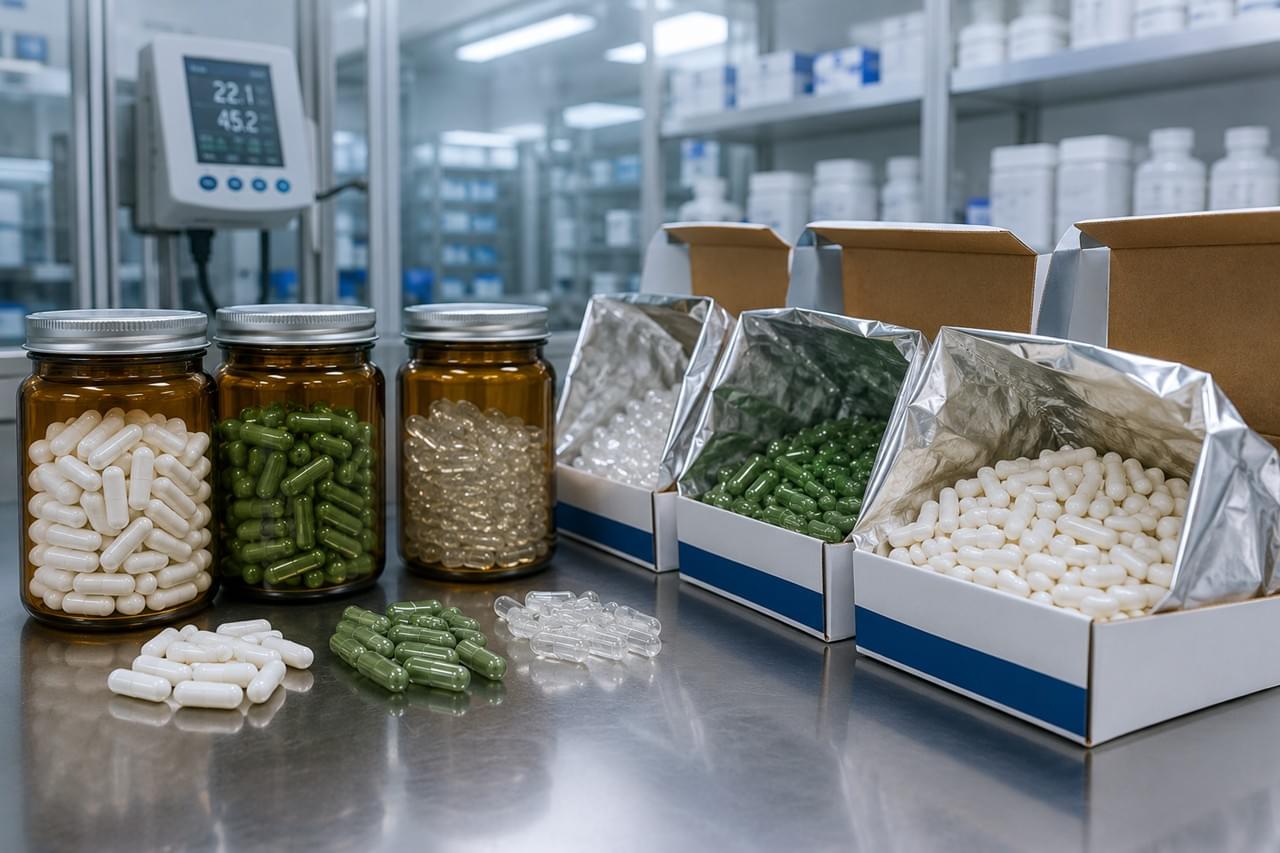
Proper storage conditions play a critical role in maintaining capsule quality throughout their shelf life.
Recommended storage conditions include:
- Temperature: 15–25°C
- Relative humidity: 35–65%
- Protection from direct sunlight
- Storage in original sealed packaging
Poor environmental control can lead to:
❌ Brittleness
❌ Deformation
❌ Capsule sticking
❌ Reduced dissolution performance
For gelatin capsules in particular, humidity management is essential because excessive dryness can cause cracking, while excessive humidity may lead to softening.
👉 Related Reading:
How Storage Conditions Affect Empty Capsule Stability
/blog/capsule-storage-conditions-stability/
📌 Future Trends in Pharmaceutical Empty Capsules
The global capsule market continues to evolve as manufacturers respond to changing regulatory requirements and consumer preferences.
Several trends are shaping future demand:
- Increased adoption of vegan formulations
- Growing interest in clean-label ingredients
- Greater demand for oxygen-protective capsule technologies
- Expansion of global pharmaceutical exports
- Stricter international quality standards
As a result, HPMC and pullulan capsules are experiencing strong growth, particularly within premium nutraceutical and specialty pharmaceutical sectors.
✅ Choosing the Right Empty Capsules Manufacturer
Selecting a reliable empty capsules manufacturer is just as important as selecting the capsule material itself.
Before making a sourcing decision, manufacturers should evaluate suppliers based on:
✅ GMP compliance
✅ ISO-certified quality systems
✅ Batch traceability
✅ Regulatory documentation support
✅ Global export experience
✅ Technical formulation expertise
At Vsun Medical, we manufacture a complete portfolio of pharmaceutical grade capsules, including gelatin, HPMC, pullulan, and enteric capsule solutions. Every batch is produced under GMP-compliant conditions and supplied with comprehensive quality documentation to support pharmaceutical and nutraceutical manufacturers worldwide.
Whether you’re launching a new supplement brand or scaling pharmaceutical production, partnering with an experienced supplier can help ensure product consistency, regulatory compliance, and long-term market success.
👉 Request capsule samples and pricing:
 English
 Arabic
 German
 French
 Italian
 Spanish
 Russian
 Japanese
 Korean
 Turkish
 Portuguese