
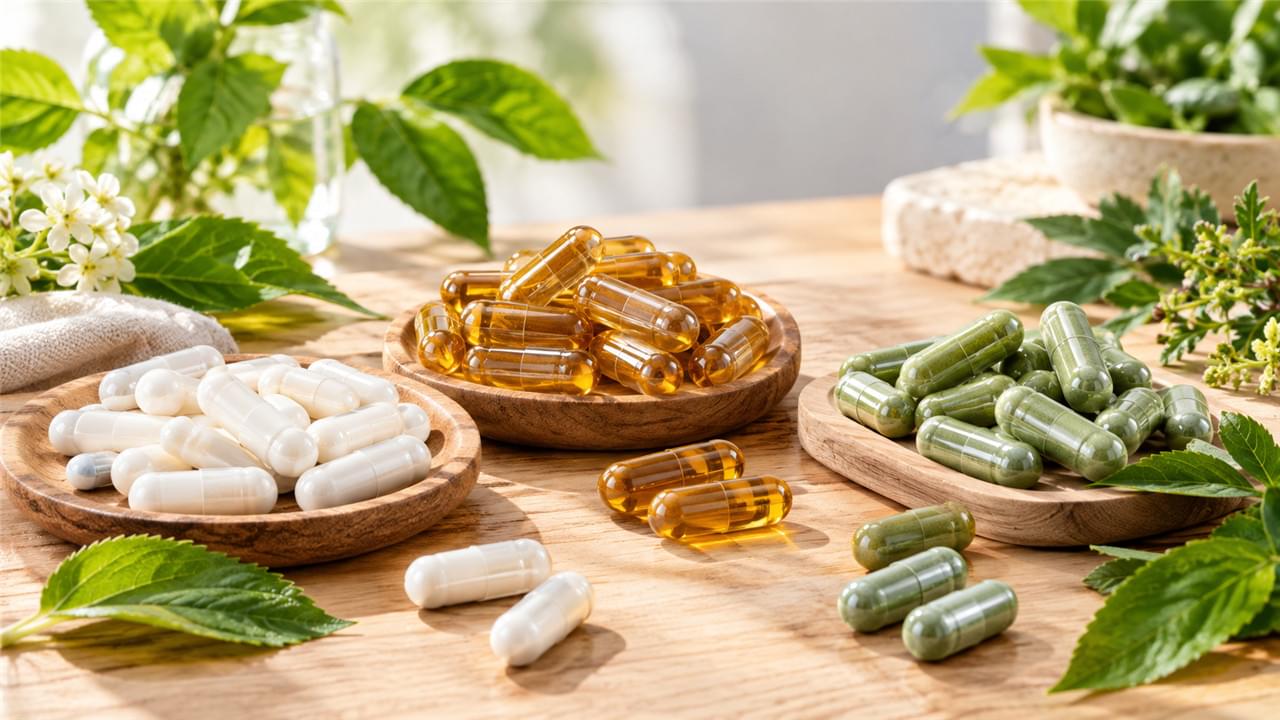
TL;DR: Plant-based capsules are the fastest-growing segment of the global empty capsule market — and the shift is structural, not a passing trend. 🌱 Veganism, clean label demand, halal and kosher expansion, regulatory transparency, and premium formulation niches are converging on the same conclusion: the future of encapsulation is plant-derived. This pillar guide breaks down seven market forces, compares HPMC and pullulan positioning, and maps a practical transition plan for nutraceutical and pharmaceutical brands. 📈
📊 The Market in Numbers
Plant-Based Capsules: The Market at a Glance
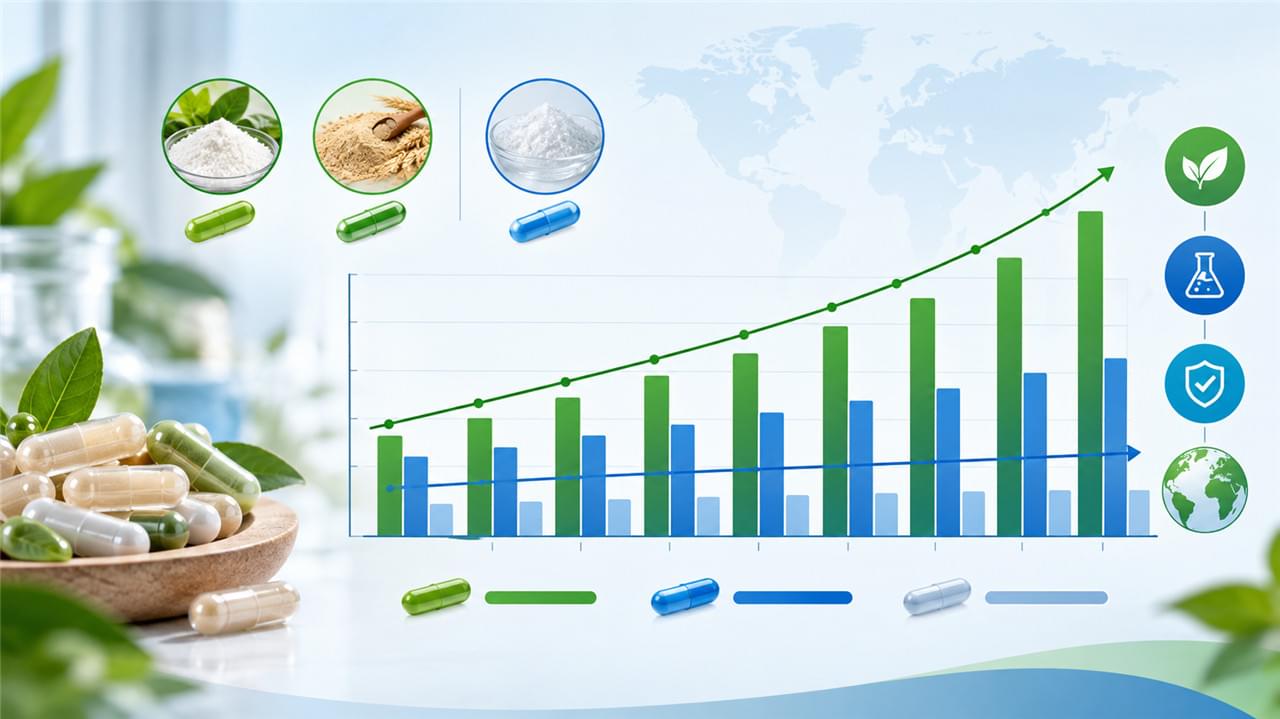
The global pharmaceutical empty capsule market was valued at roughly $3.5 billion in 2024, and plant-derived capsule materials (HPMC, pullulan, starch-based) are its fastest-growing slice:
| Metric | Data Point |
|---|---|
| Global empty capsule market size (2024) | ~$3.5 billion |
| Plant-derived segment share | ~25–30% and climbing |
| Segment CAGR (2024–2030) | ~8–10% (vs. 3–4% for gelatin) |
| HPMC capsule market CAGR | ~9–11% |
| Pullulan capsule market CAGR | ~10–12% (premium tier) |
| Key growth regions | North America, Western Europe, Middle East, Southeast Asia |
How fast is the shift running compared to gelatin? At 8–12% annual growth versus gelatin’s 3–4%, plant-derived materials are projected to hold 35–40% of the global empty capsule market by 2030, up from roughly a quarter today. That gap widens every year. ⏱️
Not a Niche — a Structural Shift
Nothing here depends on a single consumer fad. Seven distinct forces — some consumer-driven, some regulatory, some purely commercial — are pushing in the same direction. We’ll walk through all seven, because understanding which ones apply to your product lines is what turns a market report into a sourcing decision.
💚 Force 1: The Global Veganism Movement
Veganism has graduated from dietary preference to mainstream identity: an estimated 80–100 million vegans worldwide growing at 9.6% annually, plus the 30–40% of consumers in developed markets who describe themselves as flexitarian. Survey data consistently shows 60–70% of regular supplement users prefer non-animal capsule materials when price-competitive.
What Vegan Capsule Market Growth Means for Brands
The vegan segment is now large enough to sustain dedicated product lines and premium pricing. Brands running exclusively plant-derived formats can claim “100% vegan certified” positioning — genuine differentiation in crowded retail channels. For a material-level deep dive, see our HPMC vegetable capsules guide for natural and vegan markets. 🌿
🏷️ Force 2: Clean Label Supplements Demand
Clean label means simple, recognizable ingredients with transparent sourcing and minimal processing — no artificial colors, no synthetic fillers, no animal-derived components, and documentation to prove it. The FDA’s dietary supplement framework increasingly rewards exactly this kind of label clarity.
Why gelatin is a clean label liability:
- 🐄 Animal welfare concerns — consumers increasingly question animal-sourced ingredients in non-essential products
- 🧪 BSE/TSE awareness — even scientifically managed risk creates lingering doubt on the shelf
- 📋 Label complexity — “contains bovine/porcine gelatin” declarations read negatively in clean label channels
A “vegetable capsule” statement, by contrast, communicates transparency by itself. No caveats, no sourcing footnotes, no explaining to do.
🕌 Force 3: Halal and Kosher Market Expansion
The global halal economy exceeds $3 trillion annually, and halal-certified nutraceuticals are one of its fastest legs — roughly 2 billion Muslim consumers, a halal pharma market growing at 8–10% CAGR, and key markets concentrated in Saudi Arabia, the UAE, Indonesia, Malaysia, and Turkey.
The gelatin problem in halal trade: bovine gelatin needs slaughterhouse-level halal certification, and porcine gelatin is categorically prohibited. Plant-derived capsule shells are inherently halal-suitable — the entire sourcing-verification layer simply disappears. Kosher buyers read the same logic the same way. ✅
📜 Force 4: Regulatory Pressure and Supply Chain Transparency
Post-COVID resilience concerns and tightening scrutiny of animal-derived pharma materials keep raising gelatin’s compliance cost:
- EU MDR and pharmacopoeial alignment — the European Pharmacopoeia monographs and harmonized standards demand ever-more-detailed sourcing documentation for animal-derived excipients
- BSE/TSE country restrictions — a single risk-classification change can disrupt gelatin supply from an entire source country; plant-derived material carries no such exposure
- ESG reporting — institutional buyers increasingly score suppliers on environmental and governance metrics, where plant-derived sourcing earns points gelatin cannot
⚖️ HPMC vs. Pullulan: Positioning for Supplement Brands
HPMC Plant-Based Capsules: The Mainstream Standard
HPMC is the established workhorse of the category:
- Widest size range (000 through 5)
- Competitive pricing — a 20–40% premium over gelatin
- Proven regulatory acceptance in all major markets
- Halal/kosher certification widely available
Best suited for: general nutraceutical lines, vitamins and minerals, herbal formulations, and pharma products needing vegan positioning. 💡
Pullulan Plant-Based Capsules: The Premium Tier
Pullulan occupies the top shelf:
- 🛡️ Superior oxygen barrier — critical for omega-3, CoQ10, and antioxidant formulations
- ✨ Naturally translucent aesthetic with premium shelf appeal
- 🌾 Non-GMO certification available
- 💰 A 40–80% premium over gelatin
What’s the outlook for pullulan specifically? It’s the fastest-growing capsule material at 10–12% CAGR, driven by premium supplement positioning and its oxygen-barrier advantage for high-value formulations. As consumer awareness of those functional benefits spreads, premiumization keeps accelerating pullulan adoption. See our pullulan capsules oxygen-barrier guide for the technical detail. 🌟
Are Plant-Based Capsules More Expensive Than Gelatin?
Yes — HPMC runs a 20–40% premium and pullulan 40–80%. But brands increasingly accept the differential for three reasons: consumers demonstrably pay more for vegan and clean label positioning, halal and kosher market access widens the addressable audience, and polyphenol-rich formulations avoid gelatin’s cross-linking reformulation costs entirely. Price the capsule against the margin it protects, not the gelatin quote it beats. 💰
🚀 Forces 5–7: The Next Wave of Demand
5. CBD and Personalized Nutrition
CBD brands overwhelmingly choose plant-derived shells — their customers are disproportionately plant-conscious, and brand alignment matters. Direct-to-consumer personalized supplement brands are following the same default, because the ingredient-aware demographic they attract reads capsule shells the same way it reads everything else on the label. 🌿
6. Middle East and Southeast Asia
Halal certification requirements across these regions create structural, regulation-backed demand. Brands planning distribution there should treat plant-derived sourcing as a market-access strategy, not a marketing preference.
7. Pharmaceutical Adoption
Nutraceutical brands led the adoption curve; pharma is now following — for vegetarian-labeled products, halal-certified pharmaceutical markets, and reformulations stripping animal-derived excipients. Can approved products switch from gelatin? Yes, but the pathway varies: in the US a capsule material change may require a supplemental NDA/ANDA submission, while the EU handles it through the variation classification system depending on whether regulators class it as major or minor. Loop in regulatory affairs early. 🏥
🧭 Building Your Transition Strategy
Vsun Medical Market Intelligence Team: the transition is irreversible — it’s driven by structural consumer and regulatory forces, not fashion. Four practical steps:
- 🔍 Audit your portfolio for gelatin dependency, product line by product line
- 🤝 Qualify a supplier with GMP documentation and full regulatory files — our pharmaceutical empty capsules selection guide covers what to ask for
- 📅 Phase the transition, starting with your most consumer-facing lines where the label wins are largest
- 💎 Reserve pullulan for premium and performance-differentiated products where the oxygen barrier earns its premium
We supply both HPMC and pullulan with complete documentation and flexible MOQ to support phased planning. ✅
🌱 Ready to Build Your Clean Label Capsule Line?
Vsun Medical manufactures GMP-certified HPMC and pullulan capsules in the full size range — with halal/kosher certification support, non-GMO options, and flexible MOQ for brands and pharmaceutical manufacturers entering the category.
Request Plant-Based Capsule Samples & Pricing → vsunmedical.com/contact
GMP Compliant · ISO Certified · Halal/Kosher Available · Non-GMO Options
Browse the complete empty capsule product line to find your format.
 English
 Arabic
 German
 French
 Italian
 Spanish
 Russian
 Japanese
 Korean
 Turkish
 Portuguese