
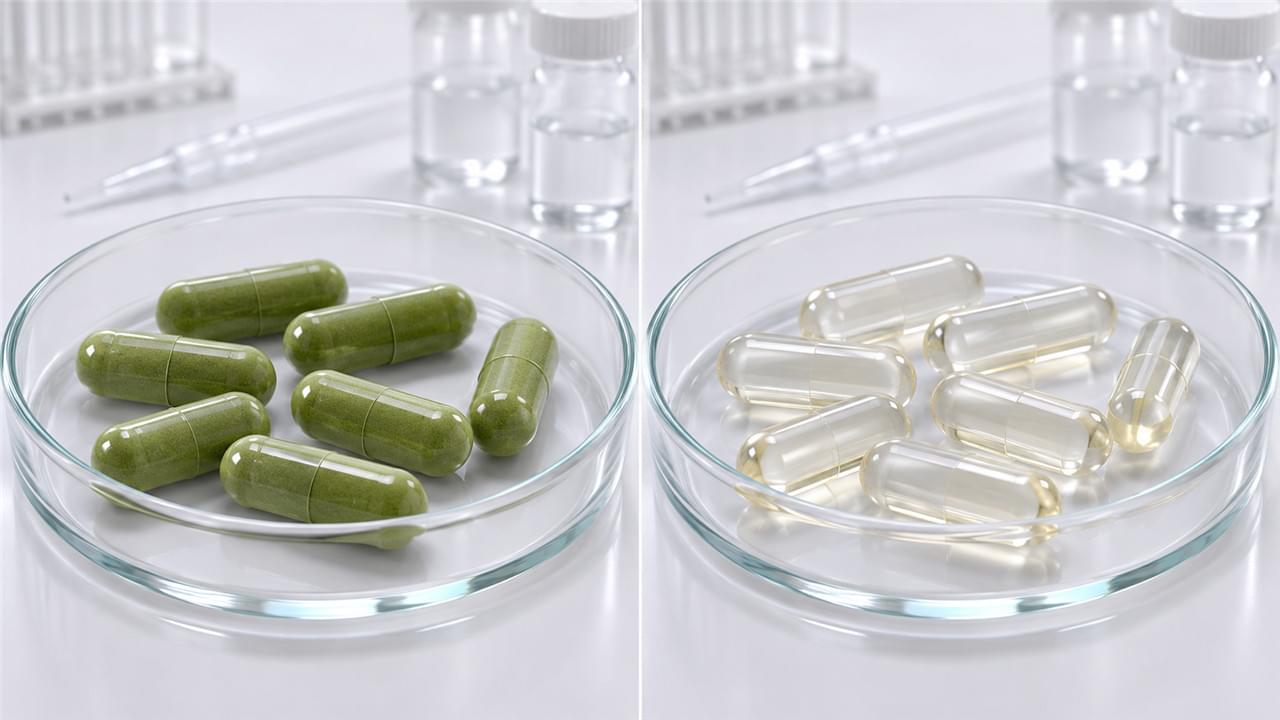
TL;DR: Plant capsules (HPMC and pullulan) and gelatin capsules each carry distinct performance profiles across dissolution speed, humidity tolerance, fill compatibility, and long-term shelf stability. The right choice depends on your active ingredient, your target market, and where the product will travel. This guide breaks the comparison into five practical, data-backed facts so procurement teams and formulators can decide with evidence instead of habit.
Why This Comparison Matters More Than You Think 🧭
For pharmaceutical formulators and supplement brand managers, the capsule shell is not a packaging afterthought — it is a formulation variable that quietly shapes:
- Dissolution rate, and therefore bioavailability
- Physical stability through manufacturing, shipping, and storage
- Fill compatibility and the risk of chemical interaction
- Regulatory documentation for every market you enter
- Label claims such as vegan, halal, and kosher
Pick the wrong shell and you may discover the problem eighteen months later, in a stability chamber or — worse — a customer complaint. This article compares plant capsules against gelatin across five dimensions that actually decide real purchasing decisions. For market context, start with our pillar guide on Plant-Based Capsule Market Trends.
The Five Facts That Decide the Choice 🔍
Fact 1: How Plant Capsules Dissolve vs Gelatin ⏱️
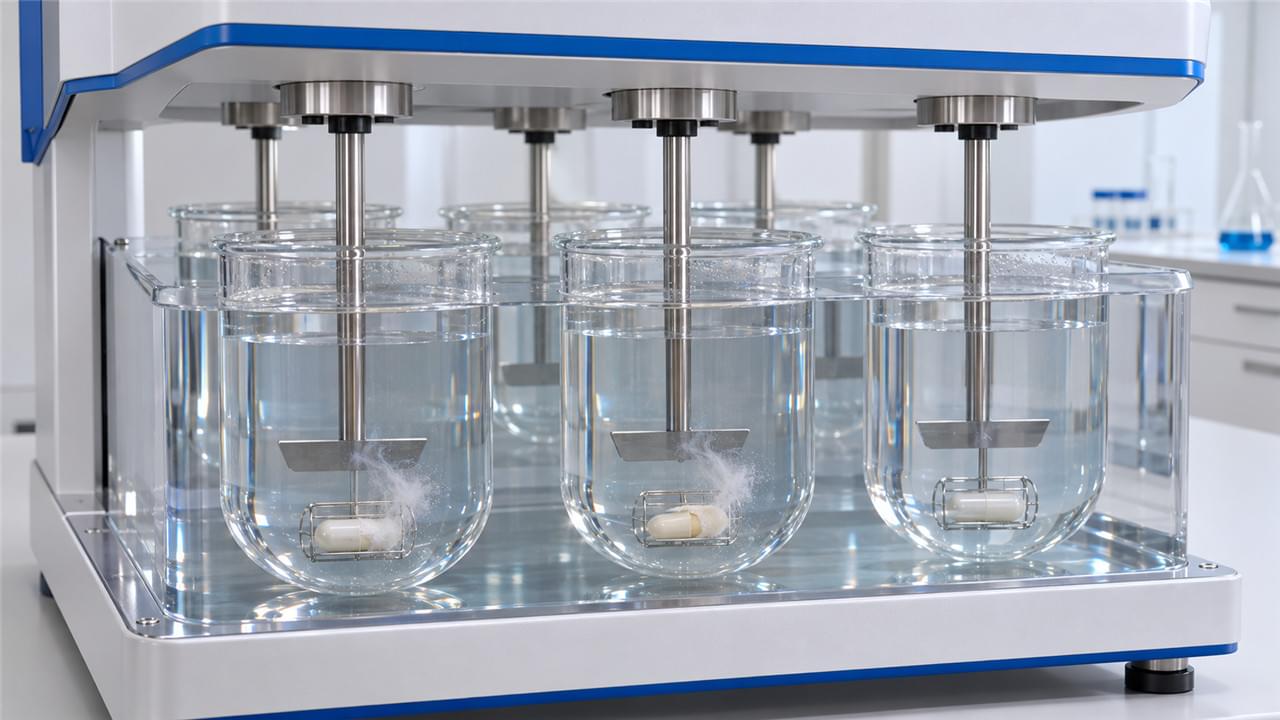
Dissolution — how fast the shell opens and releases its contents — is a core bioavailability parameter. Pharmacopeial testing (USP <711>, Ph. Eur. 2.9.3) standardizes the conditions, and USP dissolution standards define how the measurement is done.
Gelatin capsules have the fastest, best-characterized profile: rapid swelling and opening at body temperature. In typical USP Apparatus 2 testing at 37°C, they disintegrate within 5–15 minutes.
HPMC capsules open through a different mechanism — hydration and gel-layer formation before the shell releases. That can add time: 15–30 minutes in some studies. But three nuances matter:
- The gap often falls within specification for most formulations
- Shell composition (with or without gelling agents such as carrageenan) changes the dissolution rate significantly
- For modified-release or enteric applications, the slower profile becomes an advantage
Pullulan capsules sit in between — quicker than standard HPMC, slightly slower than gelatin.
| Shell Type | Typical Disintegration (37°C, water) | Notes |
|---|---|---|
| Gelatin | 5–15 minutes | Fastest; well-characterized |
| Pullulan | 10–20 minutes | Fast; natural origin |
| HPMC (standard) | 15–30 minutes | Gel-layer mechanism |
| HPMC (with gelling agents) | 10–20 minutes | Optimized grades available |
Formulator note: these are indicative literature ranges. Your fill formulation, capsule size, and test conditions move the numbers — always validate with your own product.
Fact 2: Plant Capsules Win the Humidity Battle 🌡️
If one difference justifies rethinking your shell choice, it is this one — especially for supply chains that cross several climate zones.
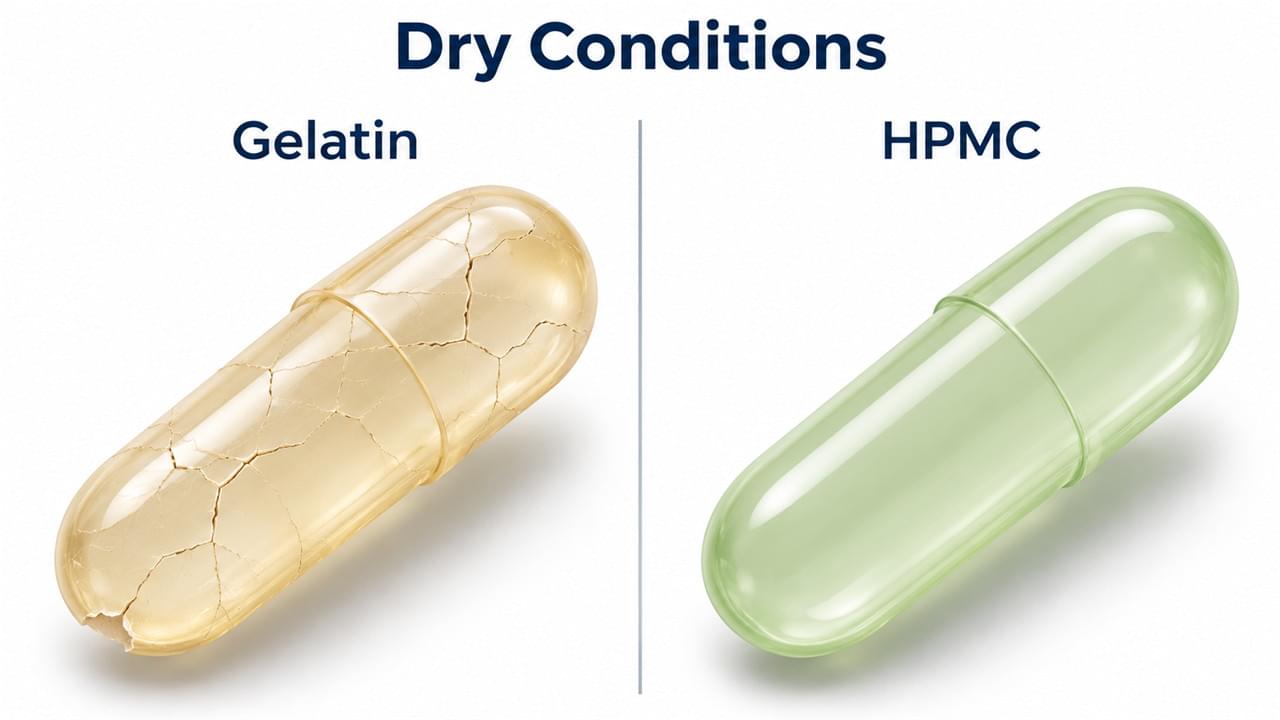
Gelatin capsules need tight humidity control, typically 35–65% RH. Below roughly 30% RH they turn brittle and crack; above 65% they soften and deform. Temperature extremes accelerate both failures. Anyone who has opened a carton of split capsules after a desert or coastal transit knows the cost.
HPMC capsules function across roughly 15–70% RH and show far less brittleness in dry conditions. That wider window translates directly into simpler, safer ambient logistics.
Pullulan capsules add their own strength: the pullulan biopolymer is a natural moisture barrier, giving excellent humidity stability without additives.
| Shell Type | Optimal Storage RH | At Low RH | At High RH |
|---|---|---|---|
| Gelatin | 35–65% | Brittle, cracking risk | Softening, deformation |
| HPMC | 15–70% | Stable | Slight softening |
| Pullulan | 20–65% | Stable | Stable |
Practical implication: for products headed to humid tropical markets (Southeast Asia, Sub-Saharan Africa, South Asia) or arid regions (Middle East, Northern China), plant capsules carry a genuine logistical margin that gelatin cannot match without packaging gymnastics — desiccants, foil blisters, climate-controlled containers.
Fact 3: Gelatin Cross-Linking Is a Failure Mode Plant Capsules Cannot Have ⚠️
Here is the fact most buyers underestimate. Gelatin cross-linking happens when aldehydes, reducing sugars, or Maillard reaction products in the fill react with gelatin proteins to form insoluble bridges. The shell looks perfectly intact — then dissolves far too slowly and fails dissolution specifications.
This is not theoretical. The FDA’s guidance on dissolution testing addresses cross-linked gelatin directly, and multiple product recalls have traced back to it.
HPMC and pullulan contain no protein, so they are chemically immune to this reaction. They stay inert in contact with aldehydes, reducing sugars, and typical pharmaceutical fill components. That matters most for:
- Formulations containing botanical extracts or flavonoids with aldehyde functionality
- Products still in development, where cross-linking risk is uncharacterized
- High-value products where a dissolution failure would be commercially devastating
| Risk Factor | Gelatin | HPMC | Pullulan |
|---|---|---|---|
| Cross-linking risk | Present | None | None |
| Aldehyde sensitivity | High | None | None |
| Reducing sugar sensitivity | Present | None | None |
| Protein–API interaction | Possible | None | None |
Fact 4: Fill Material Compatibility for Plant Capsules 💧
All three shells handle powders, granules, and pellets well. The differences appear at the edges:
Liquid and semi-solid fills:
- Gelatin: workable, but liquid migration over time can swell the shell without band sealing
- HPMC: compatible with banding; generally stable with oil and semi-solid fills
- Pullulan: excellent for oil-containing fills thanks to its oxygen barrier
Hygroscopic fills:
- Gelatin: may pull moisture from the fill and lose shell integrity
- HPMC: lower water exchange with the fill
- Pullulan: strong barrier against moisture migration in both directions
Highly acidic fills:
- Gelatin: can hydrolyze at low pH
- HPMC and pullulan: markedly more resistant
If your roadmap includes liquid or hygroscopic formulations, read our deep dive on HPMC vegan capsules, which covers banding and sealing practice in detail.
Fact 5: Plant Capsules Cut the Certification Paperwork 📋
Regulatory load is the quiet cost center in capsule sourcing:
| Consideration | Gelatin | HPMC | Pullulan |
|---|---|---|---|
| Animal-derived sourcing audit | Yes | No | No |
| Halal documentation | Required | Not required | Not required |
| Kosher documentation | Required | Simplified | Simplified |
| TSE/BSE documentation (EU) | Yes | No | No |
| GRAS / EFSA status | Established | Established | Established |
For manufacturers exporting to GCC countries, the EU, and other markets with strict halal or animal-origin documentation, HPMC and pullulan remove entire audit chains from your QA calendar. Our overview of global plant capsule regulations maps the requirements market by market.
So Which Shell Should You Actually Choose? ✅
| Scenario | Recommended Shell |
|---|---|
| Fastest dissolution required | Gelatin |
| Oxygen-sensitive fill (probiotics, omega-3) | Pullulan |
| Humid or mixed-climate logistics | HPMC or Pullulan |
| Vegan / halal market targeting | HPMC or Pullulan |
| Aldehyde-containing fill | HPMC or Pullulan |
| Lowest cost, high-volume production | Gelatin |
| Premium supplement positioning | Pullulan |
| Broad multi-market regulatory simplicity | HPMC |
Expert perspective — Vsun Medical Formulation Advisory: “We advise customers to run three filters in order: market requirements (who you sell to), formulation requirements (what’s inside), and logistics requirements (where it’s going and how). Apply all three and the gelatin-versus-plant decision usually makes itself.”
For probiotic and omega-3 projects in particular, see why pullulan capsules for organic supplements have become the premium default.
Ready to Validate the Right Shell for Your Formula? 🚀
Vsun Medical supplies gelatin, HPMC, and pullulan pharmaceutical empty capsules for every formulation and market target. Our technical team helps you match shell to fill, climate, and certification path before you commit to a production run.
- ✅ All three shell types from one GMP-compliant line
- ✅ Certificate of Analysis with every batch
- ✅ Sample quantities for your own dissolution validation
- ✅ Global logistics support for multi-climate distribution
Speak to a Capsule Specialist →
FAQ
Q1: Do plant capsules dissolve slower than gelatin?
HPMC capsules may take slightly longer in standard dissolution testing, depending on the shell formulation, while pullulan behaves closer to gelatin. For most applications the difference sits within acceptable limits — validate with your specific fill and test conditions before scaling.
Q2: What is capsule cross-linking and why does it matter?
It is a chemical reaction between gelatin proteins and aldehydes or reducing sugars that renders the shell insoluble and severely slows release. HPMC and pullulan cannot cross-link because they contain no protein, which makes them the default choice for sensitive fills.
Q3: Can gelatin capsules survive humid tropical climates?
Yes, with aggressive packaging — desiccants and moisture-barrier blisters. But the logistics demand tighter control than HPMC or pullulan. For Southeast Asian or sub-Saharan distribution, plant shells give you a wider stability margin at roughly the same landed cost.
Q4: Are HPMC capsules suitable for every fill type?
HPMC handles powders, granules, pellets, and semi-solids broadly well. Band or seal liquid fills, and validate any fill with very high water activity during development — the same discipline you would apply to gelatin, minus the cross-linking worry.
Q5: Which shell is best for probiotics?
Pullulan, on the strength of its ultra-low oxygen transmission rate, which protects probiotic viability through shelf life. HPMC is a solid second choice for standard probiotic formulas; gelatin ranks last because of its higher oxygen permeability.
Published by Vsun Medical | GMP-Certified Capsule & Surgical Equipment Manufacturer
 English
 Arabic
 German
 French
 Italian
 Spanish
 Russian
 Japanese
 Korean
 Turkish
 Portuguese