
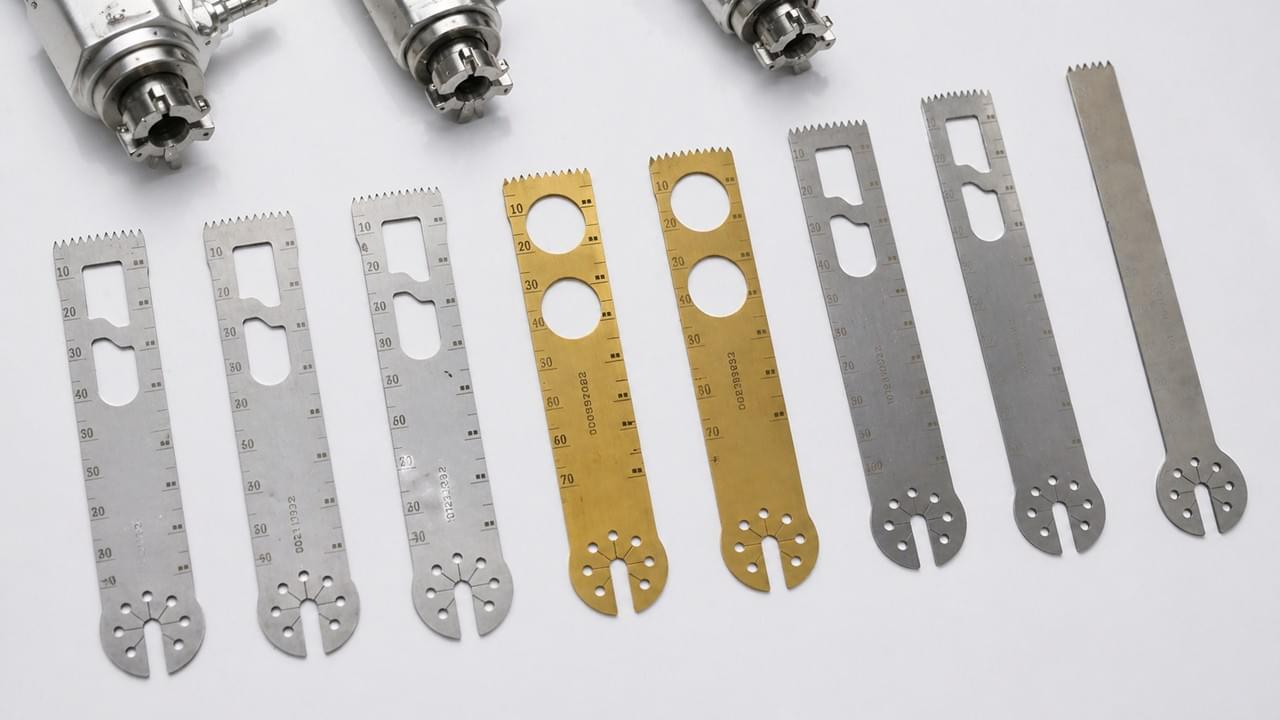
Surgical Saw Blade Materials: Why They Directly Impact Cutting Efficiency
Surgical saw blade materials play a decisive role in cutting efficiency, heat generation, and surgical precision. In orthopedic procedures, the blade is not just a component—it is the critical interface between technology and human tissue.
A well-chosen blade material improves osteotomy accuracy, reduces thermal damage, and extends usable lifespan. On the other hand, poor material selection can increase friction, elevate temperature, and compromise healing outcomes.
💡 For a broader understanding of surgical systems, see our guide on Orthopedic Power Tools: Complete Guide.
🔬 Why Surgical Saw Blade Materials Matter in Orthopedic Surgery
The performance of surgical saw blade materials directly affects several key clinical outcomes:
- ⚙️ Cut Precision:Sharp, stable edges ensure accurate bone cuts for implant alignment
- 🌡️ Thermal Control:Lower friction reduces the risk of thermal osteonecrosis
- ⏳ Blade Longevity:Better materials withstand repeated sterilization cycles
- 🛡️ Patient Safety:High-quality blades reduce breakage risk during procedures
Thermal bone damage—often overlooked—can significantly impact recovery. Maintaining efficient cutting performance is therefore not optional; it’s essential.
⚙️ Surgical Saw Blade Materials Comparison: 3 Core Types
1. High-Carbon Steel (HCS) Blades
High-carbon steel remains a traditional option in orthopedic saw blade material comparison.
Performance Overview:
- ⭐ Initial sharpness: Excellent
- ⚠️ Edge retention: Low (dulls after 1–3 uses)
- 💧 Corrosion resistance: Poor
- 🔥 Heat generation: Increases rapidly after dulling
Best For:
Cost-sensitive environments or single-use scenarios.
2. Surgical-Grade Stainless Steel (SST) Blades
Surgical stainless steel offers a strong balance between durability and cost.
Performance Overview:
- ⭐ Initial sharpness: Very good
- 🔁 Edge retention: Stable across 5–10 procedures
- 🛡️ Corrosion resistance: Excellent
- ♨️ Heat generation: Moderate and consistent
Best For:
Hospitals requiring reliable multi-use blades.
📌 Learn more about maintenance in Orthopedic Power Tool Sterilization and Maintenance.
3. Titanium Nitride (TiN) Coated Blades
TiN coating significantly enhances surgical saw blade cutting efficiency.
Performance Overview:
- ⭐ Initial sharpness: Excellent
- 💎 Edge retention: Exceptional
- 🛡️ Corrosion resistance: Superior
- ❄️ Heat generation: Lowest
Key Advantage:
Reduced friction means lower thermal damage—critical for high-precision surgeries.
Best For:
Arthroplasty and spinal procedures requiring maximum precision.
📊 Surgical Saw Blade Materials Performance Comparison
| Factor | HCS | Stainless Steel | TiN Coated |
| Initial Sharpness | ⭐⭐⭐⭐⭐ | ⭐⭐⭐⭐☆ | ⭐⭐⭐⭐⭐ |
| Edge Retention | ⭐⭐☆☆☆ | ⭐⭐⭐⭐☆ | ⭐⭐⭐⭐⭐ |
| Corrosion Resistance | ⭐⭐☆☆☆ | ⭐⭐⭐⭐⭐ | ⭐⭐⭐⭐⭐ |
| Heat Generation | High | Moderate | Lowest |
| Cost per Procedure | Medium–High | Low–Moderate | Lowest |
💡 While TiN blades cost more upfront, their extended lifespan significantly lowers cost per procedure.
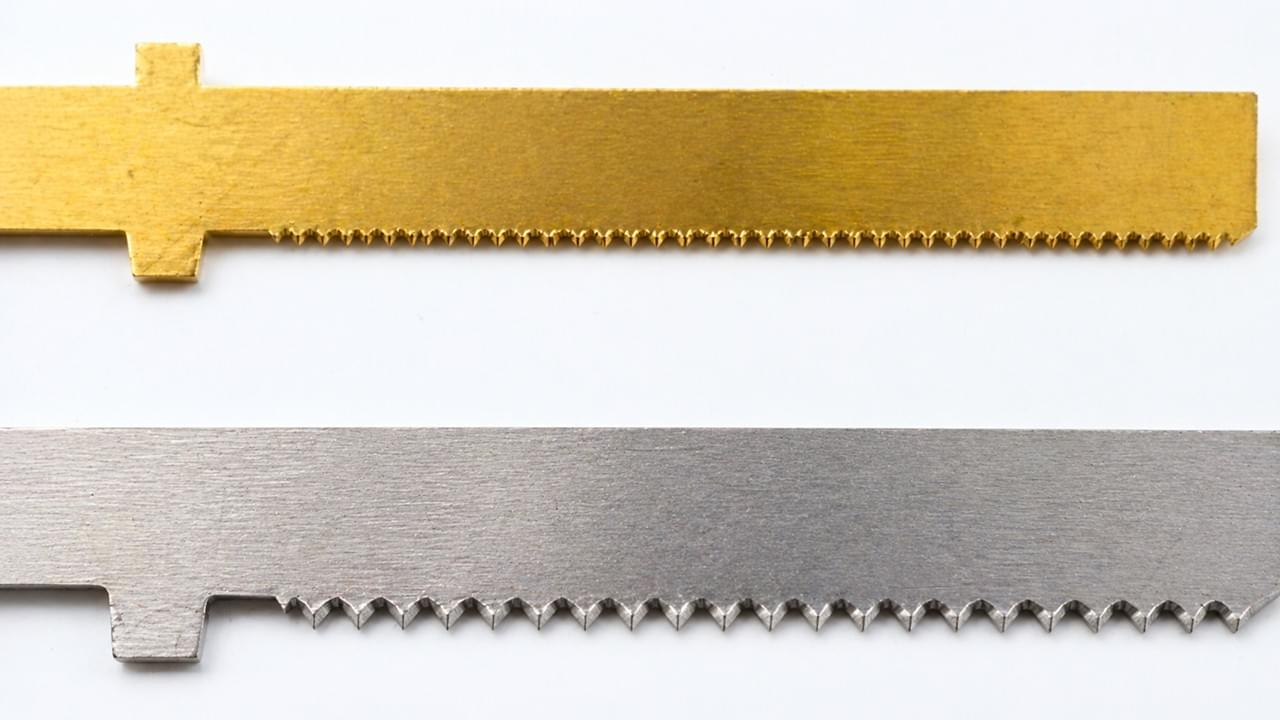
🧩 Blade Geometry: The Hidden Factor Behind Cutting Efficiency
Even the best surgical saw blade materials depend on proper geometry.
Tooth Pitch (TPI)
- 🔬 Fine pitch (14–18 TPI): smoother cuts, less heat
- ⚡ Coarse pitch (6–10 TPI): faster, more aggressive cutting
Kerf Width
- Narrow kerf = less bone loss + better implant fit
Oscillation Frequency
- Typical range: 8,000–20,000 OPM
- Higher frequency + fine pitch + hard material = optimal efficiency
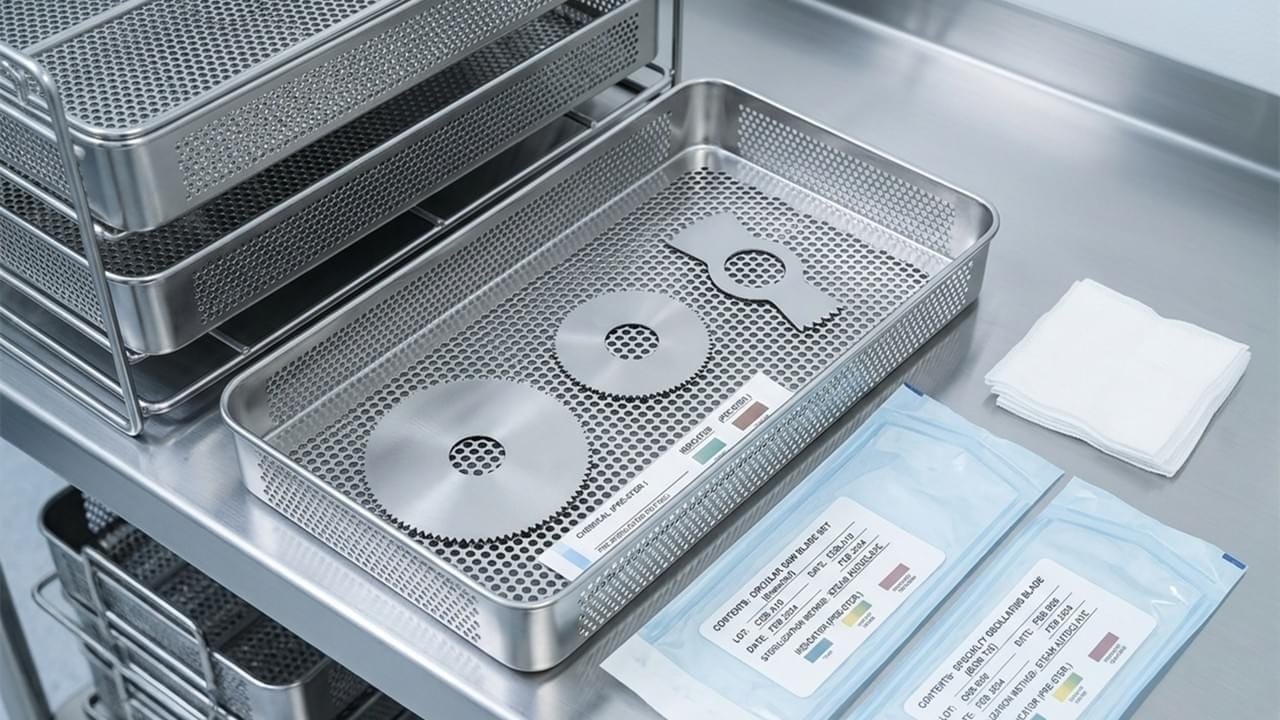
🔥 Sterilization Impact on Surgical Saw Blade Materials
Each autoclave cycle introduces heat, moisture, and mechanical stress.
Material Performance Under Sterilization:
- HCS: degrades after 5–10 cycles
- Stainless steel: stable up to 300+ cycles
- TiN coated: maintains integrity up to 400+ cycles
📌 Standards such as ISO 7153-1 Surgical instruments materials standards (https://www.iso.org) define material durability expectations.
For clinical guidelines, refer to AAOS clinical practice guidelines for orthopedic surgery (https://www.aaos.org).
🧠 Expert Insight: Best Blade Selection for Arthroplasty
For joint replacement procedures, material choice becomes even more critical.
Recommended Setup:
- ✅ TiN-coated stainless steel
- ✅ Fine tooth pitch (14–18 TPI)
- ✅ Continuous saline irrigation
This combination minimizes micro-fractures and reduces thermal injury risk—key factors in long-term implant success.
📌 Explore related innovations in Innovations in Minimally Invasive Surgery.
❓ FAQ: Surgical Saw Blade Materials
Q1: How often should blades be replaced?
- HCS: 5–10 uses
- Stainless steel: 50–150 uses
- TiN: 100–300 uses
Always inspect for wear or corrosion before surgery.
Q2: What causes thermal bone damage?
Excessive friction raises temperature above 47°C. Common causes:
- Dull blades
- High pressure
- Poor irrigation
Q3: Are TiN blades universally compatible?
Compatibility depends on connection systems, not coating material.
Q4: Can surgical blades be sharpened?
Not recommended. It alters geometry and compromises safety.
🚀 Optimize Your Surgical Cutting Performance
Choosing the right surgical saw blade materials is one of the most impactful decisions in orthopedic surgery. It directly influences efficiency, safety, and long-term outcomes.
👉 Explore our full range of solutions: Orthopedic power tools product page
Vsun Medical Advantages:
- ✅ GMP compliant manufacturing
- ✅ ISO certified systems
- ✅ 2-year warranty coverage
📩 Request specifications & samples: vsunmedical.com/contact
 English
 Arabic
 German
 French
 Italian
 Spanish
 Russian
 Japanese
 Korean
 Turkish
 Portuguese